Ta kategoria dedykowana jest współczesnym czytelniczkom literatury kobiecej. Bardzo szeroki wybór romansów, kryminałów, powieści obyczajowe, poruszająca literatura kobieca, erotyki, harlequiny polskich i zagranicznych autorów. Każda lubiąca czytać kobieta znajdzie coś szczególnego dla siebie.
Polecamy literaturę Sergiusza Piaseckiego, Stanisława Srokowskiego, Diany Palmer czy w końcu Blanki Lipińskiej.
'I read it and reread it, and wept and laughed and trembled with horror which at all times assails me yet'.
With its strange, imaginative blend of horror, science fiction, romance and lyrical prose, Robert W. Chambers' The King in Yellow is a classic masterpiece of weird fiction. This series of vaguely connected stories is linked by the presence of a monstrous and suppressed book which brings fright, madness and spectral tragedy to all those who read it. An air of futility and doom pervade these pages like a sweet insidious poison. Dare you read it?
This collection has been called the most important book in American supernatural fiction between Poe and the moderns. H. P. Lovecraft, creator of the famed Cthulu mythos, whose own fiction was greatly influenced by this book stated that The King in Yellow 'achieves notable heights of cosmic fear'.
COUNT LEO TOLSTOY (1828-1910) is best known for War and Peace and Anna Karenina, commonly regarded as amongst the greatest novels ever written. He also, however, wrote many masterly short stories, and this volume contains four of the longest and best in distinguished translations that have stood the test of time.
In the early story Family Happiness, Tolstoy explores courtship and marriage from the point of view of a young wife. In The Kreutzer Sonata he gives us a terrifying study of marital breakdown, in The Devil a powerful depiction of the power of sexual temptation, and, in perhaps the finest of all, The Death of Ivan Ilyich, he portrays the long agony of a man gradually coming to terms with his own mortality.
This volume also includes an Introduction and Notes written specially for this Wordsworth edition by Dr Tim Cook, formely lecturer in literature at the Universities of Kingston and Ulster. Previous work contributed by Dr Cook for Wordsworth includes an introduction and notes to Charles Dickens' Nicholas Nickleby.
From "The Crystal Egg": There was, until a year ago, a little and very grimy-looking shop near Seven Dials over which, in weather-worn yellow lettering, the name of "C. Cave, Naturalist and Dealer in Antiquities," was inscribed. The contents of its window were curiously variegated. They comprised some elephant tusks and an imperfect set of chessmen, beads and weapons, a box of eyes, two skulls of tigers and one human, several moth-eaten stuffed monkeys (one holding a lamp), an old-fashioned cabinet, a flyblown ostrich egg or so, some fishing-tackle, and an extraordinarily dirty, empty glass fish tank. There was also, at the moment the story begins, a mass of crystal, worked into the shape of an egg and brilliantly polished.
The clergyman, without any ceremony, asked the price of the crystal egg.
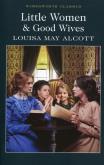
Life in the March household is full of adventures and accidents as the four very different March sisters follow their varying paths to adulthood, always maintaining the special bond between them. Sensible Meg, impetuous Jo, shy Beth and artistic Amy each have to confront different challenges as they grow up together and attempt to learn how to be both happy and good.
The phrase `life's little ironies' is now proverbial, but it was coined by Hardy as the title for this, his third volume of short stories. While the tales and sketches reflect many of the strengths and themes of the great novels, they are powerful works in their own right. Unified by his quintessential irony, strong visual sense, and engaging characters, they deal with the tragic and the humorous, the metaphysical and the magical. The collection displays the whole range of Hardy's art as a writer of fiction, from fantasy to uncompromising realism, and from the loving re-creation of a vanished rural world to the repressions of fin-de-siecle bourgeois life.
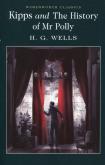
These comic novels will resonate with anyone who has ever felt trapped by circumstance. Their central characters, Artie Kipps and Alfred Polly, are prisoners of their modest social class, limited education, dull work, and sterile relationships. In Wells' hands they break out of the cages that society has constructed for them, learning after bitter experience the truth that 'if the world does not please you, you can change it'. This message, a revolutionary one in its day for the growing army of Edwardian clerks and drapers, is handled with a rich comedy and freshness that belies its deadly seriousness.
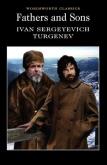
Fathers and Sons is one of the greatest nineteenth century Russian novels, and has long been acclaimed as Turgenev's finest work. It is a political novel set in a domestic context, with a universal theme, the generational divide between fathers and sons. Set in 1859 at the moment when the Russian autocratic state began to move hesitantly towards social and political reform, the novel explores the conflict between the liberal-minded fathers of Russian reformist sympathies and their free-thinking intellectual sons whose revolutionary ideology threatened the stability of the state.
At its centre is Evgeny Bazorov, a strong-willed antagonist of all forms of social orthodoxy who proclaims himself a nihilist and believes in the need to overthrow all the institutions of the state. As the novel develops Bazarov's political ambitions become fatally meshed with emotional and private concerns, and his end is a tragic failure. The novel caused a bitter furore on its publication in 1862, and this, a year later, drove Turgenev from Russia.
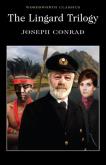
Almayer’s Folly was Conrad’s outstanding debut novel: as well as exploring the culture of a part of the world previously unknown to English fiction, it showed immense sophistication in its handling of narrative, time-shifts and point of view. Hailed as ‘a writer of genius’ by contemporary reviewers, Conrad returned to the same riverine settlement in Borneo in his second novel, An Outcast of the Islands. Set some 15 years earlier, this prequel to Almayer’s Folly tells how Lingard lost his monopoly of trade in Sambir, and follows the dangerous rivalry of his protegés Willems and Almayer. In The Rescue, the narrative moves even further back in time and shows the young, idealistic Lingard torn between his loyalties to his Sulawesi allies and his unexpected attraction to Edith Travers, with explosive consequences. Throughout this sequence of novels, the fascinating figure of Captain Lingard comes steadily into the foreground.
Wordsworth Classics makes the Lingard Trilogy available, for the first time, in a single volume.
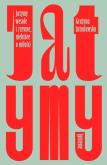
Jatymy"" to zbiór miniaturowych opowiadań, w których autorka zagląda pod podszewkę dobrze znanego nam świata. Mają w sobie coś z bajek, filozoficznych opowiastek, flash fiction, udramatyzowanych scenek, a nawet kabaretowych skeczy. Może są nowym gatunkiem?
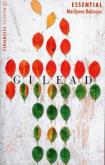
In 1956, toward the end of Reverend John Ames's life, he begins a letter to his young son, a kind of last testament to his remarkable forebears. 'It is a book of such meditative calm, such spiritual intensity that is seems miraculous that her silence was only for 23 years; such measure of wisdom is the fruit of a lifetime. Robinson's prose, aligned with the sublime simplicity of the language of the bible, is nothing short of a benediction. You might not share its faith, but it is difficult not to be awed moved and ultimately humbled by the spiritual effulgence that lights up the novel from within' Neel Mukherjee, The Times 'Writing of this quality, with an authority as unforced as the perfect pitch in music, is rare and carries with it a sense almost of danger - that at any moment, it might all go wrong. In Gilead, however, nothing goes wrong' Jane Shilling, Sunday Telegraph
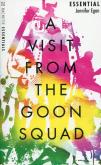
A Visit from the Goon Squad is a book about the interplay of time and music, about survival, about the stirrings and transformations set inexorably in motion by even the most passing conjunction of our fates. In a breathtaking array of styles and tones ranging from tragedy to satire to PowerPoint, Egan captures the undertow of self-destruction that we all must either master or succumb to; the basic human hunger for redemption; and the universal tendency to reach for both—and escape the merciless progress of time—in the transporting realms of art and music. Sly, startling, exhilarating work from one of our boldest writers.
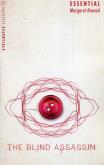
Laura Chase's older sister Iris, married at eighteen to a politically prominent industrialist but now poor and eighty-two, is living in Port Ticonderoga, a town dominated by their once-prosperous family before the First War. While coping with her unreliable body, Iris reflects on her far from exemplary life, in particular the events surrounding her sister's tragic death. Chief among these was the publication of THE BLIND ASSASSIN, a novel which earned the dead Laura Chase not only notoriety but also a devoted cult following.
Sexually explicit for its time, THE BLIND ASSASSIN describes a risky affair in the turbulent thirties between a wealthy young woman and a man on the run. During their secret meetings in rented rooms, the lovers concoct a pulp fantasy set on Planet Zycron. As the invented story twists through love and sacrifice and betrayal, so does the real one; while events in both move closer to war and catastrophe. By turns lyrical, outrageous, formidable, compelling and funny, this is a novel filled with deep humour and dark drama.
A soldier wounded in the Civil War, Inman turns his back on the carnage of the battlefield and begins the treacherous journey home to Cold Mountain, and to Ada, the woman he loved before the war began.
As Inman attempts to make his way across the mountains, through the devastated landscape of a soon-to-be-defeated South, Ada struggles to make a living from the land her once-wealthy father left when he died. Neither knows if the other is still alive.
Rodzina Auerbachów przeprowadza się do wielkiego domu, znajdującego się obok nowo powstającego osiedla. Na tle urokliwego jeziora, w sąsiedztwie ruin historycznego zamku, rozgrywają się skomplikowane losy bohaterów: miłość miesza się z nienawiścią, podziw z zazdrością, zdrada z wiernością...
Po ostatnich przygodach Jessica Bannister czuje, że potrzebuje urlopu.
Prosi redaktora naczelnego o kilka tygodni wakacji. Ten nie tylko się zgadza,
ale też wręcza jej bilet na rejs luksusowym liniowcem. Tak zaczyna się
najbardziej przerażająca podróż Jessiki! Statek, którym płynie, w pewnym
momencie natrafi a na tajemniczą mgłę. Prawdziwe kłopoty zaczynają się,
gdy wyłania się z niej starodawny piracki galeon...
Pragnąc zemścić się na byłym chłopaku za doznane upokorzenie, Nicola na jego oczach zaczyna flirtować z obcym mężczyzną. Wypija jednak o jeden kieliszek szampana za dużo, wskutek czego budzi się rano w nieznanym mieszkaniu, u boku wczoraj poznanego pana. Po kilku latach dowiaduje się, że to właśnie ten ktoś ma zostać jej nowym szefem. On chyba jej nie poznaje, ona zaś zdecydowanie nie zamierza mu się przypominać
Opis książki/treści:
Jedno z najpopularniejszych opowiadań F.S. Fitzgeralda.
„Życie byłoby nieskończenie szczęśliwsze, gdybyśmy mogli rozpocząć
je w wieku lat osiemdziesięciu i stopniowo zbliżać się do osiemnastu”.
To zdanie Marka Twaina zainspirowało Francisa Scotta Fitzgeralda
do napisania tego utworu. Wielokrotnie ekranizowana opowieść
o losie człowieka, który rozpoczął swoje życie w wieku starca.
Opis serii:
Książki z serii Metoda Edukacyjnego Czytania Ilyi Franka służą do nauki języka angielskiego przy okazji czytania ciekawych książek w języku oryginalnym z wplecionym dosłownym polskim tłumaczeniem. Metoda polega na specjalnej adaptacji treści w taki sposób że cała zawartość książki jest podzielona na akapity. Najpierw czytamy akapit, z wplecionym polskim tłumaczeniem i niektórymi gramatycznymi i fonetycznymi wyjaśnieniami. Następnie ten sam akapit czytamy już bez tłumaczenia, w oryginalnym języku, czyli "płyniemy bez asekuracji". Właśnie wtedy nasz mózg przyzwyczaja się do rozumienia języka obcego. Całość jest na tyle spójna, że odbiorca ma poczucie czytania książki w oryginale i przyswaja język, znajdując się w naturalnym stanie rozluźnienia i zaciekawienia treścią. U podstaw Metody leżą między innymi założenia Sugestopedii dr. G Łozanowa, a także prace Jego następców i samodzielnych lingwistów, A.Leontieva, G. Kitajgorodskiej. Seria zawiera dzieła klasyków literatury brytyjskiej i amerykańskiej i w ten sposób przybliża czytelnikowi specyfikę anglojęzycznej kultury. Język oryginału nie jest w żaden sposób uproszczony ani skrócony.
Powieść Gepard to literackie arcydzieło, które doczekało się setek wydań i przekładów na wiele języków; na jego podstawie powstał nagrodzony w 1963 roku Złotą Palmą film Luchina Viscontiego. To opowieść o niezwykłym człowieku - arystokracie, uczonym erudycie - a zarazem wnikliwe studium poświęcone zawirowaniom historii i nieuchronnym przemianom społecznym. Nowe tłumaczenie autorstwa Stanisława Kasprzysiaka pozwala na nowo odkryć tą znakomitą książkę.
In 1985, Yale Tishman, the development director for an art gallery in Chicago, is about to pull off an amazing coup: bringing an extraordinary collection of 1920s paintings as a gift to the gallery. Yet as his career begins to flourish, the carnage of the AIDs epidemic grows around him. One by one, his friends are dying and after his friend Nico’s funeral, he finds his partner is infected, and that he might even have the virus himself. The only person he has left is Fiona, Nico’s little sister.
Thirty years later, Fiona is in Paris tracking down her estranged daughter who disappeared into a cult. While staying with an old friend, a famous photographer who documented the Chicago epidemic, she finds herself finally grappling with the devastating ways the AIDS crisis affected her life and her relationship with her daughter. Yale and Fiona’s stories unfold in incredibly moving and sometimes surprising ways, as both struggle to find goodness in the face of disaster.
‘Family, that slippery word, a star to every wandering bark and everyone sailing under a different sky’
Where do you go if you can’t feel at home in your own family? When the people who made you can’t fathom who you become? In these three tales of quarrelling clans and fraught reunions, Mark Haddon shows family in its frank, unsparing yet frequently absurd light, and, in doing so charts a stormy course into the crucible of the self.
Selected from The Pier Falls, The Red House and A Spot of Bother.
Ten produkt jest zapowiedzią. Realizacja Twojego zamówienia ulegnie przez to wydłużeniu do czasu premiery tej pozycji. Czy chcesz dodać ten produkt do koszyka?