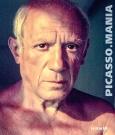
Picasso’s work appears never to have ceased to haunt the imagination of his peers. The great stylistic periods and certain emblematic works by Picasso like "Les Demoiselles d’Avignon" or "Guernica" will be answered by contemporary artworks. The publication will showcase the rich confrontation with Picasso’s work undertaken by contemporary artists since the 1960s.
Pablo Picasso’s vibrant presence struck a chord in the 1960s with the return to Picassien archetypal figures by Pop Art and Narrative Figuration by Warhol, Lichtenstein, Equipo Cronica, Erró. Martin Kippenberger’s self-portraits reveal the impact of Picasso’s public image on the imagination of 20th century artists. David Hockney’s Polaroid composites and multi-screen videos echo Picasso’s Cubism and his exploration of a polyfocal space. Picasso’s stylistic eclecticism, his “cannibalism” of the old masters, the free craftsmanship of the later paintings inspired a new generation of artists like Georg Baselitz, Jean-Michel Basquiat, or Julian Schnabel. Rineke Dijkstra’s video installation "I See a Woman Crying (Weeping Woman)", (2009-2010) will demonstrate the presence of Picasso’s work in contemporary imagination, in its most diverse means of expression (cinema, digital images, from videos to comic strips).
Anton Corbijn’s most recent publication goes back to his roots featuring his autobiographic series a. somebody; an early series of tombs, Cemetery; and eighty iconic portraits of musicians and bands from his career of 40 years.
Schirmer/Mosel. Catalogue Bucerius Kunst Forum, Hamburg. Ed by Anton Corbijn and Franz Wilhelm Kaiser. With texts by Franz Wilhelm Kaiser, Marie-Noël Rio and Daria Dittmeyer-Hössl. 220 pages, 119 colour and duotone plates. Size: 22.5 x 28 cm, softcover. English/German edition.
Meticulously researched and full of new insights into the private life of a very public superstar, Michelle Morgan tells the story of a movie actress whose fame never fades. In public, Marilyn Monroe was feted and loved, but in her private life there were controversies, conspiracies and unsolved puzzles.
Including rare and previously unseen images from the star's life, this book reveals a different side of Marilyn from the celluloid invention and is based on the author's extensive interviews with the main players in Monroe's life - family and friends, as well as work colleagues and more casual acquaintances.
‘An oppressive, forensic, psychological thriller: J.K. Rowling meets Antony Beevor, Stephen King and Marina Warner … Schiff’s writing is to die for’ THE TIMES
It began in 1692, over an exceptionally raw Massachusetts winter, when a minister’s niece started to scream and convulse. It ended less than a year later, but not before panic had infected the entire colony, nineteen men and women had been hanged, and a band of adolescent girls had brought Massachusetts to its knees.
Vividly capturing the dark, unsettled atmosphere of seventeenth-century America, Stacy Schiff’s magisterial history draws us into this anxious time. She shows us how quickly the epidemic of accusations, trials, and executions span out of control. Above all, Schiff’s astonishing research reveals details and complexity that few other historians have seen.
How does time function? What is ecstasy? What is illusion?
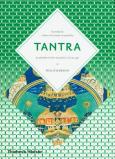
Tantra is a set of beliefs and practices that originated in India, and combines eroticism, magic and metaphysics. The extraordinary visual imagery of Tantrik wisdom, often misunderstood, is clearly explained here, revealing the most essential patterns of human symbolic expression.
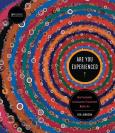
Looking at art through the lens of psychedelic experience and culture, New York Times critic Ken Johnson reveals an unexpected and illuminating dimension of art since the 1960s.
Art changed in a big way in the 1960s; it was no longer something just to look at and appreciate for its aesthetic qualities. The traditional ideal of connoisseurship was out; art as consciousnessaltering experience was in. Boundaries between conventional media such as paintings and sculpture stretched and dissolved. Hierarchical distinctions between high and low culture became irrelevant. Weird new forms proliferated. Would art have developed as it did in the past fifty years, would it be the way it is now, if psychedelics and psychedelic culture had not been so popular?
To answer that question, Ken Johnson, the veteran art critic of The New York Times, has examined a broad array of art of the past half century, from Robert Smithson’s Spiral Jetty to Pipilotti Rist’s recent swooningly trippy video installation at the Museum of Modern Art and Richard Serra’s warped, spiraling mazes ofinches-thick Corten steel, looking not just for obvious signs of psychedelic style but for an underlying psychedelic ethos animating the art. Extensively illustrated in color, Johnson’s pioneering study may change the way we see contemporary art.
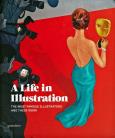
Illustration is no longer just illustration. Today, illustrators write and create children's picture books and graphic novels; they structure information through infographics; they design logos, fonts, and other typographical applications; they contribute to the editorial design of newspapers and magazines; they apply their talents to advertising and fashion; and they develop and produce their own products on the basis of their creations. Despite the fact that all of these activities are based on illustration, each of them has its own rules and its own specialists, tasks, and job descriptions to go along with them.
Against this background, A Life in Illustration gives an insider‘s look at the diverse facets of this creative medium through extensive portraits of today‘s leading illustrators. Perceptive texts and images describe the work and day-to-day activities of outstanding talents including Christoph Niemann, Andrea Ventura, Jan Van Der Veken, Peter Grundy, Jessica Hische, and the New York Times’s Jonathan Corum.
Gdybym miał się pokusić o samoocenę, powiedziałbym pewnie, że jestem genetyczną krzyżówką realisty z optymistą. Gołym okiem widzę, że jest źle. To nie znaczy jednak, że jest beznadziejnie. A skąd! Co zrobić, żeby było dobrze? To, o czym już na tych łamach pisałem. Co najmniej tyle czasu, ile poświęcamy na walkę ze złem, poświęcić na wspieranie dobra. Ile pomyj wylewamy na złych polityków, tyle miodu wylać na polityków (czy kandydatów) dobrych. Ile psioczenia na niemądrych hierarchów, tyle lajków (na różne sposoby wyrażanych) dla tych, którzy robią rzeczy dobre. Ile energii wydanej na krytykowanie wstrętnych mediów, tyle wspierania tych uczciwych i mądrych.
Chcemy lepszej Polski, lepszego Kościoła? Samo się, proszę Państwa, nie zrobi.
Teraz albo nigdy to wybór najciekawszych i zawsze aktualnych tekstów Szymona Hołowni publikowanych na łamach „Tygodnika Powszechnego” w latach 2017–2019. Autor podejmuje w nich najważniejsze tematy dotyczące społeczeństwa, Kościoła, świata.
Powyższy opis pochodzi od wydawcy.
A survivor's account of the Tiananmem Square massacre, told through photographs taken at the event. The colours of the photographs have been inverted to create a more interactive and thought-provoking experience Inspired by the reform movements in the Soviet Union and Eastern Europe, student protests began to form in China in the spring of 1989. They made Tiananmen square their central meeting place. Unsettled by this public display of dissent, on 3 and 4 June the Chinese army violently crushed the protests. There are no official figures for the number of victims. 2600 people are estimated to have been killed, and 7000 injured. The photographer Xu Yong, aged 35 at the time, was among the survivors. He captured the chaotic scenes on celluloid. In 2014, he published his photos in a book that was banned by the board of censors. This new edition, published by Verlag Kettler, makes the book available to the public. Xu has not retouched the photographs. He reproduces the negatives with inverted colours, which can only be deciphered once the color inversion function on mobile phones or tablets is activated. Consequently, his work represents an eerie yet authentic perspective on this watershed moment in Chinese history.
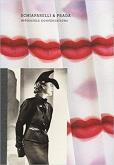
Art plays an important role in the life and design of both Elsa Schiaparelli and Miuccia Prada. Schiaparelli's collaborations with the Surrealists Salvador Dalí and Jean Cocteau, and Prada's interest in and support of contemporary artists, as reflected in the collections and galleries of the Fondazione Prada, have brought art and fashion into close proximity, in a direct, synergistic, and culturally redefining relationship. It seems especially fitting, therefore, that their inventive creations be the subject of an exhibition at The Metropolitan Museum of Art.
Schiaparelli and Prada: Impossible Conversations considers the striking affinities between these two iconic Italian designers from different eras: Schiaparelli, who worked in Paris from the 1920s until her house closed in 1954, and Prada, who took over her family's Milan-based business in 1978. Inspired by Miguel Covarrubias's "Impossible Interviews" for Vanity Fair in the 1930s, Harold Koda and Andrew Bolton, respectively Curator in Charge and Curator of The Costume Institute, conceived of this exhibition and accompanying publication as a series of imaginary conversations between these women to suggest new readings of their most innovative work.
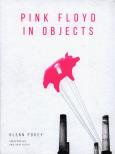
Remember Me: Pink Floyd in Objects tells the story of the great psychedelic rock band through items that they created, instruments they played, music they wrote and posters, photographs and props from their amazing stage shows. A strange collection of vehicles, posters, tickets, instruments, records and press cuttings come together to tell the story of decades of music in a new and innovative way. The history of Pink Floyd has been related before... but never like this.
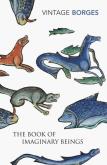
Few readers will want, or be able, to resist this modern bestiary. Here you will find the familiar - Gryphons, Minotaurs and Unicorns - as well as the Monkey of the inkpot and other undeniably curious beasts. Borges' cunning and humorous commentary is sheer delight.
Simo Heikkilä jest fińskim projektantem i architektem wnętrz. Karierę rozpoczął od projektowania sklepów i wystaw dla Marimekko, a następnie zajął się projektowaniem mebli. Książka ma na celu przedstawienie życia i twórczości Simo Heikkilä w szerszym kontekście historycznym i stylistycznym.
Patrz mi w oczy"" to niezwykła książka, to opowieść o zespole Aspergera napisana przez kogoś, kto doświadcza go na co dzień, a jednocześnie jest cenionym terapeutą, który przez wiele lat pomagał dzieciom z zaburzeniami ze spektrum autyzmu. Autor daje nam jedyną w swoim rodzaju okazję spojrzenia na świat swymi oczyma, pokazuje jak to jest być w jego głowie. To więcej niż autobiografia, to mądra, cenna refleksja, czasem wzruszająca, czasem zabawna, ale przede wszystkim szczera do bólu. Pełna też użytecznych, przetestowanych w praktyce, wskazówek dla osób zmagających się z ASD i ich rodzin, znajomych czy pracodawców. Pozycja obowiązkowa dla osób z zaburzeniami ze spektrum autyzmu, rodziców i nauczycieli dzieci z ASD, psychologów i terapeutów zainteresowanych tematem. Ale nie tylko.Jeśli chcecie się dowiedzieć:dlaczego autor je wszystko, co przed nim postawią, chociaż nienawidzi jedzenia;dlaczego umawianie się na randki dla nastolatka może być problematyczne;jak według autora wygląda praca marzeń;jakim mężem jest autor i z czym może zmagać się małżonek osoby z ASD (te informacje ujawnia jego żona);i co zespół Aspergera ma wspólnego z uczeniem się hipnozy,to ta książka jest dla Was.
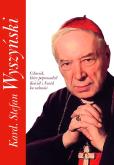
"Kard. Stefan Wyszyński. Człowiek, który poprowadził Kościół i Naród ku wolności" jest 39. wydaną książką Piotra Stefaniaka. Przywołuje on w niej Prymasa Tysiąclecia, który prowadził Kościół, swój Naród i Polskę przez mroczną, ponurą noc stalinowską i dekady komunistycznego zniewolenia. Kim był? Bezsprzecznie mężem opatrznościowym, apologetą wolności Kościoła i swobody, wyznawania wiary przez człowieka w czasach ideologii socjalizmu.
Zapłacił za to wielką cenę, zwłaszcza w postaci powszechnego niezrozumienia.
Prześladowany przez komunistów stał się opoką dla zgnębionego i łaknącego wolności i sprawiedliwości Narodu.
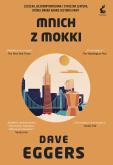
Mnich z mokki to prawdziwa historia Amerykanina jemeńskiego pochodzenia, wychowanego w San Francisco, który marzy o wskrzeszeniu pradawnej sztuki uprawy jemeńskiej kawy, lecz wojna domowa powoduje, że zostaje uwięziony w Sanie. Mokhtar Alkhanshali ma dwadzieścia cztery lata i pracuje jako portier, gdy przedmiotem jego fascynacji staje się historia kawy i fakt, że centralne miejsce zajmuje w niej Jemen. Wyjeżdża z San Francisco i wyrusza w podróż do ojczyzny przodków, żeby odwiedzić plantacje na urwistych zboczach wysoko w górach Jemenu. Zbiera próbki kawy, organizuje plantatorów i jest bliski odniesienia sukcesu, gdy kraj ogarnia wojna domowa. Na ziemię spadają saudyjskie bomby, amerykańska ambasada zostaje zamknięta, a Mokhtar musi znaleźć sposób na wydostanie się z Jemenu, nie dysponując niczym poza nadzieją. Mnich z Mokki opowiada o odważnym młodym wizjonerze, który podąża za prawdziwie amerykańskim marzeniem. „Emocjonująca opowieść o życiu pełnym odwagi i pasji”. Enterteinment Weekly „Zapierająca dech”. The Guardian „Nieskończenie interesująca”. San Francisco Chronicle „Wciągająca”. Los Angeles Times
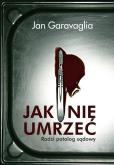
Dlaczego mężczyźni toną trzy razy częściej niż kobiety?
Ile groźnych bakterii może znajdować się na ubraniu twojego lekarza?
Czy wiesz, że najczęstszą przyczyną śmierci w czasie urlopu jest zawał serca?
Prawdopodobnie nie zabije cię seryjny morderca, terrorysta ani klęska żywiołowa. Do nagłej i gwałtownej śmierci najczęściej prowadzi lekkomyślność, roztargnienie lub błędna ocena sytuacji. Wystarczy chwila nieuwagi, żeby skończyć w kostnicy.
Doskonale wie o tym dr Jan Garavaglia, która od lat pracuje jako patolog sądowy. Wielu jej „pacjentów” mogłoby wciąż żyć, gdyby tylko byli bardziej rozważni. W swojej książce opowiada o tym, czego nauczyli ją zmarli: jak nie trafić do prosektorium zbyt wcześnie. Ich historie pokażą ci, jak unikać zagrożeń życia codziennego, przeżyć wakacje nad jeziorem, podróż do pracy lub pobyt w szpitalu.
• Nie ignoruj nawet lekkiego bólu zęba. Próchnica może doprowadzić do zgonu w ciągu zaledwie 10 dni.
• Zawsze sprawdzaj, czy aptekarz wydał ci odpowiedni lek. Jego pomyłka może cię kosztować życie.
• Pod żadnym pozorem nie uchylaj okna w samochodzie tylko do połowy. W razie wypadku właśnie ta szczelina może cię zabić.
Lektura obowiązkowa dla fanów Trupiej farmy i… dla tych, którzy nie chcieliby na nią za szybko trafić.
Powyższy opis pochodzi od wydawcy.
Published to coincide with the first UK retrospective of work by Edward Krasinski (1925 -2004), one of the most important Polish artists of the twentieth century. This richly illustrated publication will investigate the development of Krasinski's unique formal language, showcasing works spanning over fifty years of the artist's remarkable career. Introduced by Tate curator Kasia Redzisz, a series of texts by leading scholars present fresh research on Krasinski's practice, placing it within a wider global context. Featuring rarely reproduced artworks and documentary photographs, as well as previously unpublished archival materials and a fully illustrated chronology, this is the definitive English-language volume on one of the most important Polish artists of the twentieth century.
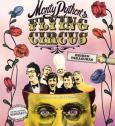
This is the story of Monty Python, one the most popular and influential forces in modern comedy-and of their TV show-told in words and images. This celebratory book includes 22 removable facsimiles of rare memorabilia from their official archives, including hand-scribbled scripts, cue sheets, character lists, posters, and animation artwork. Written with active input from the Pythons themselves, the book recounts the adventures of all six members and their TV show, from early days in the Cambridge Footlights through early appearances on the BBC, global stardom, the inevitable fights, and their triumphant reunions.
Ten produkt jest zapowiedzią. Realizacja Twojego zamówienia ulegnie przez to wydłużeniu do czasu premiery tej pozycji. Czy chcesz dodać ten produkt do koszyka?