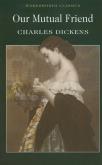
Our Mutual Friend, Dickens' last complete novel, gives one of his most comprehensive and penetrating accounts of Victorian society. Its vision of a culture stifled by materialistic values emerges not just through its central narratives, but through its apparently incidental characters and scenes. The chief of its several plots centres on John Harmon who returns to England as his father's heir. He is believed drowned under suspicious circumstances - a situation convenient to his wish for anonymity until he can evaluate Bella Wilfer whom he must marry to secure his inheritance. The story is filled with colourful characters and incidents - the faded aristocrats and parvenus gathered at the Veneering's dinner table, Betty Higden and her terror of the workhouse and the greedy plottings of Silas Wegg.
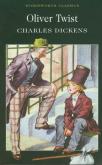
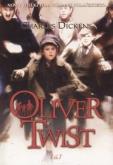
Dickens had already achieved renown with The Pickwick Papers. With Oliver Twist his reputation was enhanced and strengthened. The novel contains many classic Dickensian themes - grinding poverty, desperation, fear, temptation and the eventual triumph of good in the face of great adversity.
Oliver Twist features some of the author's most enduring characters, such as Oliver himself (who dares to ask for more), the tyrannical Bumble, the diabolical Fagin, the menacing Bill Sikes, Nancy and 'the Artful Dodger'.
For any reader wishing to delve into the works of the great Victorian literary colossus, Oliver Twist is, without doubt, an essential title.
Little Dorrit is a classic tale of imprisonment, both literal and metaphorical, while Dickens' working title for the novel, Nobody's Fault, highlights its concern with personal responsibility in private and public life. Dickens' childhood experiences inform the vivid scenes in Marshalsea debtor's prison, while his adult perceptions of governmental failures shape his satirical picture of the Circumlocution Office. The novel's range of characters - the honest, the crooked, the selfish and the self-denying - offers a portrait of society about whose values Dickens had profound doubts.
Little Dorrit is indisputably one of Dickens' finest works, written at the height of his powers. George Bernard Shaw called it ‘a masterpiece among masterpices’, a vedict shared by the novel's many admirers.
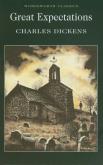
Considered by many to be Dickens' finest novel, Great Expectations traces the growth of the book's narrator, Philip Pirrip (Pip), from a boy of shallow dreams to a man with depth of character. From its famous dramatic opening on the bleak Kentish marshes, the story abounds with some of Dickens' most memorable characters. Among them are the kindly blacksmith Joe Gargery, the mysterious convict Abel Magwitch, the eccentric Miss Haversham and her beautiful ward Estella, Pip's good-hearted room-mate Herbert Pocket and the pompous Pumblechook. As Pip unravels the truth behind his own ‘great expectations’ in his quest to become a gentleman, the mysteries of the past and the convolutions of fate through a series of thrilling adventures serve to steer him towards maturity and his most important discovery of all - the truth about himself.
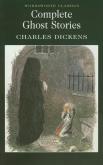
Interest in supernatural phenomena was high during Charles Dickens' lifetime. He had always loved a good ghost story himself, particularly at Christmas time, and was open-minded, willing to accept, and indeed put to the test, the existence of spirits. His natural inclinations toward drama and the macabre made him a brilliant teller of ghost tales, and in the twenty stories presented here, which include his celebrated A Christmas Carol, the full range of his gothic talents can be seen. Chilling as some of these stories are, Dickens has managed to inject characteristically grotesque comedy as he writes of revenge, insanity, pre-cognition and dream visions, he indulges also in some debunking of contemporary credulity.
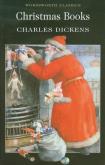
In these five long stories, written specifically for Christmas, Dickens combines his concern for social ills with the myths and memories of childhood and traditional seasonal lore.
A Christmas Carol, the first of the selection, has become a touchstone of English festive fiction and an enduring favourite internationally. Repeatedly adapted, parodied, staged and filmed, this richly influential tale is powerfully vivid and moving.
The other stories, The Chimes, The Cricket on the Hearth, The Battle of Life andThe Haunted Man, blend whimsy, sentiment, comedy, satire, the didactic and the fantastic, developing resourcefully the theme of individual and social regeneration.
OSTATNIA POWIEŚĆ CHARLESA DICKENSA, KTÓRA PRZESZŁA DO LEGENDY
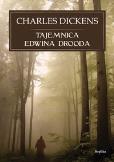
Na początku 1870 roku Charles Dickens, ceniony przez krytykę i uwielbiany przez czytelników spełniony pisarz, decyduje się podjąć wyzwanie i... napisać kryminał. Powieść ukazuje się w odcinkach, lecz na zawsze pozostaje bez zakończenia…
Tajemnica Edwina Drooda okazała się być jeszcze bardziej tajemnicza niż zamierzył to Dickens. Pisarz zmarł zanim dokończył powieść, a na przestrzeni lat pojawiło się wiele spekulacji dotyczących jej związków ze śmiercią autora. Książka doczekała się wielu interpretacji, alternatywnych zakończeń, spiskowych teorii i zaskakujących finałów. W tym wydaniu książki zamieszczone zostały trzy wersje możliwego zakończenia powieści i rozwiązania tajemnicy niespodziewanego zniknięcia młodego architekta, Edwina Drooda.
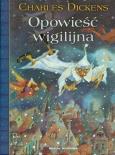
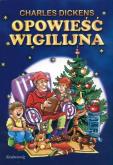
Opowieść o tym szczególnym dniu w roku, kiedy pieniądze tracą swoją wartość, o dniu, w którym przerywamy pogoń za doczesnymi dobrami i skupiamy się na tym, co jest najważniejsze. Chciwego i zgorzkniałego kupca, Scrooge`a, czekają kolejne samotne święta Bożego Narodzenia. Nie martwi go to jednak wcale. Od lat jest już bowiem niezdolny do odczuwania radości z powodu ich nadejścia. Ale tym razem będzie inaczej... Wizyta niespodziewanych ""gości"" sprawi, że postanowi odmienić całe swoje dotychczasowe życie... Dodatkiem do ksiązki jest płyta z jednym rodziałem książki w interpretacji Zbigniewa Zapasiewicza.
Książka opowiada historię przemiany skąpego, bezdusznego, samolubnego Ebenezera Scrooge`a w hojnego, serdecznego, sympatycznego człowieka. Dzięki niesamowitym przeżyciom jakie go spotkały w noc wigilijną zrozumiał do czego prowadzi skąpstwo, egoizm i skupienie wszystkich uczuć na pieniądzach. Człowiek, który żyje wyłącznie po to, aby pomnażać majątek, zostanie zapomniany.
Historia młodego Olivera Twista, który z nędznego prowincjonalnego przytułku dla sierot trafia w ręce szefa szajki londyńskich złodziei. Przymuszany do przestępczych działań, wciągnięty w mroczny świat kryminalnego środowiska, podejmuje rozpaczliwe próby, aby się z niego wyzwolić, zachować godność, nie poddać się złu. Na szczęście nie jest sam. Oddani przyjaciele podejmują ryzykowną akcję, aby uwolnić go z opresji... Jest to książka o walce dobra ze złem, jedno z pierwszych dzieł literackich w mistrzowski sposób przedstawiający realia wielkomiejskiego marginesu społecznego.
Ten produkt jest zapowiedzią. Realizacja Twojego zamówienia ulegnie przez to wydłużeniu do czasu premiery tej pozycji. Czy chcesz dodać ten produkt do koszyka?