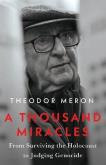
An astonishing memoir from the Holocaust survivor who oversaw the world’s first genocide trials and has advised the ICC on crimes in Israel and Gaza. When the Second World War began, Theodor Meron was a Jewish-born boy of just 9. He survived ghettos, camps and unimaginable atrocities, but lost most of his family, finding sanctuary in British Palestine after the Holocaust.Now, more than eight decades later, Judge Meron is a recognised world leader in both the scholarship and practice of international criminal justice—having served as the president of three UN tribunals, delivering landmark decisions on genocide and war crimes. This extraordinary memoir revisits Meron’s time as a legal adviser to governments, often swimming against the tide; as a restless diplomat, a boundary-pushing scholar and ultimately a ground-breaking international judge. Meron has given his life to the service of justice.He is famous for his 1967 opinion finding Jewish settlements in the occupied West Bank to be illegal under international law, an opinion he issued as a legal adviser to Israel’s Ministry of Foreign Affairs. More recently, he has advised the International Criminal Court on potential crimes in the Russia–Ukraine war, and in Israel and Gaza since 2023. The founding institutions of international justice today face unprecedented threats.Meron’s life story could not be a better timed reminder of the importance of accountability.
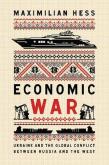
Vladimir Putin’s first invasion of Ukraine, in 2014, set off a global economic clash, as the West used its clout with international markets to deter and penalise the Kremlin. The battlelines of this ‘war by other means’ traversed a series of deep economic connections, built up during Russia’s oil, gas and commodities boom: global equity and capital markets, and transnational kleptocracy.
Maximilian Hess’s startling book lifts the lid on Russia’s response to Western sanctions, and the ensuing skirmishes in London’s courts, on Swiss trading desks and in boardrooms in New Delhi. He explores how pipelines, mines, loans and crypto-markets were weaponised. This narrative sets the stage for Putin’s all-out assault on Kyiv in February 2022, which turned financial, food and fuel markets into bona fide battlefields, bringing the fight into everyone’s home, from Pennsylvania to Pakistan.
Rather than a ‘new Cold War’, we are witnessing a conflict over finance, energy and capital markets. How such economic warfare turns out will determine the future of liberalism and democracy; it will also set a precedent for economic relations between the West and China, as the two diverge into rival spheres of influence and power.
Ten produkt jest zapowiedzią. Realizacja Twojego zamówienia ulegnie przez to wydłużeniu do czasu premiery tej pozycji. Czy chcesz dodać ten produkt do koszyka?