W tej strefie zapraszamy do nabycia książek z szeroko pojętej dziedziny jaką jest psychologia. Posiadamy podręczniki i poradniki kierowane do specjalistów psychiatrii i psychologii, a także uczniów i studentów. Poprzez poradniki z zakresu problemów emocjonalnych u dzieci i młodzieży czy okresu dojrzewania. Proponujemy poradniki dla ludzi biznesu, polityków, nauczycieli, dzieci i modzieży. Garść rozmaitych porad i rewolucyjnych technik, które pomogą otworzyć drzwi umysłu. Polecamy dobre książki psychologiczne. W ofercie psychologia społeczna, kliniczna, biznesu, rozwoju, zdrowia, sportu, psychologia umysłu, relacje międzyludzkie i wiele innych poradników.
The man with a modern mission
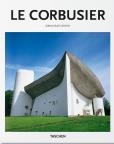
Born Charles-Édouard Jeanneret, Le Corbusier (1887–1965) is widely acclaimed as the most influential architect of the 20th century. From private villas to mass social housing projects, his radical ideas, designs, and writings presented a whole-scale reinvention not only of individual structures, but of entire concepts of modern living.
Le Corbusier’s work made distinct developments over the years, from early vernacular houses in Switzerland through dazzling white, purist villas to dynamic syntheses of art and architecture such as the chapel at Ronchamp and the civic buildings in Chandigarh, India. A hallmark throughout was his ability to combine functionalist aspirations with a strong sense of expressionism, as well as a broader and empathetic understanding of urban planning. He was a founding member of the Congrès international d’architecture moderne (CIAM), which championed “architecture as a social art.”
This book presents some of Le Corbusier’s landmark projects to introduce an architect, thinker, and modern pioneer who, even in his unrealized projects, offered discussion and inspiration for generations to come.
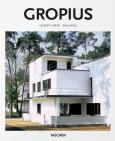
Walter Gropius, visionary of the Bauhaus and beyond
Walter Gropius (1883–1969) set out to build for the future. As the founding director of the Bauhaus, the Berlin-born architect had an inestimable influence on our aesthetic environment, championing a bold new hybrid of light, geometry, and industrial design, as dazzling today as it was a century ago.
In this essential architect introduction, we survey Gropius’ evolution and influence with 20 of his most significant projects, from the Bauhaus Building in Dessau, Germany, to the Chicago Tribune Tower and Harvard University Graduate Center, completed after Gropius’s exodus to the United States in 1937. We explore his role both as an architectural practitioner, and as a writer and educator, not only as a Bauhaus pioneer, but also, along with Ludwig Mies van der Rohe, as a leading proponent of the International Style.
Along the way, we see how many of Gropius’s tenets remain benchmarks for architects, designers, and urbanists today. Whether in his emphasis on a functional beauty or his interest in housing and city planning, Gropius astounds in the agility of his thinking as much as in the luminous precision of his work.
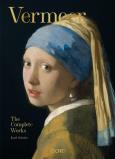
Johannes Vermeer, creator of life from oil paint
Despite numbering at just 35, his works have prompted a New York Times best seller; a film starring Scarlett Johansson and Colin Firth; record visitor numbers at art institutions from Amsterdam to Washington, DC; and special crowd-control measures at the Mauritshuis, The Hague, where thousands flock to catch a glimpse of the enigmatic and enchanting Girl with a Pearl Earring, also known as the “Dutch Mona Lisa”.
In his lifetime, however, the fame of Johannes Vermeer (1632–1675) barely extended beyond his native Delft and a small circle of patrons. After his death, his name was largely forgotten, except by a few Dutch art collectors and dealers. Outside of Holland, his works were even misattributed to other artists. It was not until the mid-19th century that Vermeer came to the attention of the international art world, which suddenly looked upon his narrative minutiae, meticulous textural detail, and majestic planes of light, spotted a genius, and never looked back.
This 40th anniversary edition showcases the complete catalog of Vermeer’s work, presenting the calm yet compelling scenes so treasured in galleries across Europe and the United States into one monograph of utmost reproduction quality. Crisp details and essays tracing Vermeer’s career illuminate his remarkable ability not only to bear witness to the trends and trimmings of the Dutch Golden Age but also to encapsulate an entire story in just one transient gesture, expression, or look.
A self-portrait in 154 songs, by our greatest living songwriter
'More often than I can count, I've been asked if I would write an autobiography, but the time has never been right. The one thing I've always managed to do, whether at home or on the road, is to write new songs. I know that some people, when they get to a certain age, like to go to a diary to recall day-to-day events from the past, but I have no such notebooks. What I do have are my songs, hundreds of them, which I've learned serve much the same purpose. And these songs span my entire life.'
In this extraordinary book, with unparalleled candour, Paul McCartney recounts his life and art through the prism of 154 songs from all stages of his career - from his earliest boyhood compositions through the legendary decade of The Beatles, to Wings and his solo albums to the present. Arranged alphabetically to provide a kaleidoscopic rather than chronological account, it establishes definitive texts of the songs' lyrics for the first time and describes the circumstances in which they were written, the people and places that inspired them, and what he thinks of them now. Presented with this is a treasure trove of material from McCartney's personal archive - drafts, letters, photographs - never seen before, which make this also a unique visual record of one of the greatest songwriters of all time.
We learn intimately about the man, the creative process, the working out of melodies, the moments of inspiration. The voice and personality of Paul McCartney sings off every page. There has never been a book about a great musician like it.
Książka ta to moja podróż w poszukiwaniu równowagi. Korzystając z własnych doświadczeń, dzielę się w niej sposobami i rozwiązaniami, które mogą posłużyć do pracy ze sobą. Drogę tę przemierzam jak swoistą podróż w głąb siebie. Znalazłam równowagę w ciele, duszy, umyśle, a podróż z samą sobą wciąż trwa i jest dla mnie pełna nowych, pięknych odkryć.Poznałam kolejne etapy rozwoju świadomości: od zagubienia, wyparcia i niezgody po naukę zrozumienia i wybaczania oraz akceptację wszystkiego tego, co jest naszą drogą do życia w równowadze.Nauka o sobie jest jedną z najciekawszych nauk, a tak rzadko jest praktykowana. Warto poznać siebie i zachować swoje jestestwo na co dzień, nawet w pozornie nieistotnych sprawach.Niezbyt często obserwujemy swoje życie w prawdzie. Zapraszam i zachęcam ćwiczeniami, by poszukać prawdy, bo prawda jest jedna. Ucząc się siebie, poprawiamy jakość swojego życia, co z pewnością budzi radość z samego istnienia.
„Najbogatszy człowiek w Babilonie” George’a S. Clasona to jeden z największych bestsellerów wszech czasów na temat budowania zabezpieczenia finansowego. Publikacja wciąż przyciąga swoją treścią, a ilość sprzedanych egzemplarzy można liczyć w milionach.
Jego siłę stanowią nie tylko ponadczasowe rady dotyczące pokonywania kolejnych przeszkód na drodze do osiągnięcia niezależności finansowej, ale także niebanalna forma. Osadzenie akcji w starożytnym Babilonie, obrazowe przedstawienie problemów bohaterów w zarządzaniu finansami osobistymi, a także specyficzna prostota przekazu sprawiają, że odbiorca ma szansę łatwiejszego przyswojenia każdej z prezentowanych porad.
Zdecydowanie nie jest to zwyczajny zbiór wskazówek na temat sposobów bogacenia się. Autor zabiera nas w podróż do barwnego świata Babilonu i na przykładach z życia uczy fundamentalnych zasad mądrego zarządzania pieniędzmi.
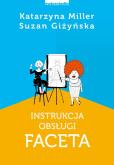
Jak zrozumieć faceta? Bestsellerowy poradnik i przewodnik w jednym. Jak świat światem kobiety poszukują odpowiedzi na dziesiątki dylematów związanych z płcią przeciwną. A gdyby tak można było zajrzeć do instrukcji obsługi mężczyzny? Instrukcja obsługi faceta to przewodnik po damsko-męskiej komunikacji, ale również szybki i praktyczny podręcznik jak wychodzić z trudnych, konfliktowych sytuacji z płcią przeciwną. Jak czytać mężczyznę i jak do niego mówić, żeby motywować go pozytywnie a nie negatywnie. Autorki w lekkiej i przewrotnej formie, ale bardzo konkretnie ukazują, jak należy reagować w przeróżnych sytuacjach, aby osiągnąć zamierzony cel. Instrukcja obsługi faceta, to pozornie proste, a w istocie rewolucyjne narzędzie niezbędne każdej kobiecie. Katarzyna Miller Najsłynniejsza polska psycholożka. Charyzmatyczna, odważna, dowcipna i pogodna, ale też szczera do bólu. Psychoterapeutka z kilkudziesięcioletnią praktyką terapeutyczną w zakresie terapii indywidualnej, małżeńskiej i grupowej. Ukończyła psychologię i filozofię na UW. Treningu psychologicznego i prowadzenia psychoterapii uczyła się w Ośrodku Synapsis od prof. dr. hab. Kazimierza Jankowskiego, a następnie od rzeszy nauczycieli polskich i zagranicznych (w tym Carla Rogersa). Wykładowczyni na licznych warsztatach rozwojowych dla kobiet. Felietonistka miesięcznika „Zwierciadło”. Autorka i współautorka wielu bestsellerowych poradników, m.in. Chcę być kochana tak, jak chcę, Nie bój się życia, Kup kochance męża kwiaty (Wydawnictwo Zwierciadło). Suzan Giżyńska Niezależna reżyserka i copywriteka, twórczyni spotów reklamowych oraz akcji społecznych. Współautorka książek, m.in. Instrukcja obsługi toksycznych ludzi, Instrukcja obsługi kobiety (Wydawnictwo Zwierciadło).
Przedmiotem moich przemyśleń postanowiłem uczynić refleksję krytyczną. Z pewnością należy ona do zbioru kluczowych idei współczesnej humanistyki. Zaskakujący jest jednak sposób jej istnienia. Mówiąc najkrócej refleksja krytyczna jest obiektem platonicznych westchnień akademickich pedagogów oraz praktyków. Zgadzamy się powszechnie, że jest czymś bardzo pożądanym i że nie można sobie wyobrazić niczego, co lepiej oddaje naturę gatunku homo sapiens. Jednak w praktyce z refleksją mamy kłopot. Po pierwsze, nie bardzo potrafimy powiedzieć, czym jest w istocie. Po drugie, bardzo rzadko (może nawet coraz rzadziej) zdarza się nam ją praktykować.
Po niespełna dwóch latach od wydania książki pt. Mutyzm wybiórczy poradnik dla rodziców, nauczycieli i specjalistów, która spotkała się z bardzo pozytywnym przyjęciem, zarówno wśród rodziców, jak również wśród nauczycieli i specjalistów, Maria Bystrzanowska, tym razem wspólnie z córką Eweliną Bystrzanowską psychologiem o specjalności klinicznej, przystąpiły do opracowania nowej książki z zakresu mutyzmu wybiórczego (MW). Książkę tę można z jednej strony potraktować jako kontynuację ww. poradnika, z drugiej zaś może ona stanowić całkiem odrębną całość.Do jej napisania zaproszone zostało szersze grono osób: praktyków pracujących na co dzień z dziećmi z mutyzmem wybiórczym (psychologów, logopedów, pedagogów i nauczycieli), a także rodziców dzieci z MW oraz osoby dorosłe, które już w dzieciństwie miały objawy tego zaburzenia i nie otrzymały właściwej pomocy. Zamiarem autorek było, aby powstała publikacja wszechstronnie opisująca to coraz powszechniej diagnozowane zaburzenie lękowe, w szczególności skuteczne sposoby jego terapii, co ważne, z uwzględnieniem realiów i specyfiki polskiego systemu oświaty.Książka składa się z dwóch głównych części. W pierwszej, bardziej teoretycznej części (rozdziały 13) Ewelina Bystrzanowska i Maria Bystrzanowska przedstawiły istotę mutyzmu wybiórczego oraz znaczenie wczesnej diagnozy i terapii dzieci z tym zaburzeniem. Poznamy również następstwa niewłaściwej terapii lub jej braku.W drugiej, praktycznej części książki (rozdział 4) po krótkim wprowadzeniu Marii Bystrzanowskiej, zawierającym przegląd skutecznych metod terapii MW, sporządzony na podstawie wyników najnowszych badań naukowych oraz doświadczeń własnych autorki - znajdują się opisy i analizy konkretnych terapii i oddziaływań prowadzonych na terenie naszego kraju przez różnych specjalistów (psychologów, logopedów i pedagogów), a także nauczycieli oraz rodziców dzieci z mutyzmem wybiórczym.
Rachunek sumienia jest spotkaniem, podczas którego patrzymy na nasze codzienne życie oczyma Chrystusa i z Chrystusem. Jest to więc doświadczenie Boga w wierze. Rachunek sumienia nie jest sposobem na uzdrowienie siebie, nie jest metodą samodoskonalenia. Uwrażliwia nas na te poruszenia, którymi posługuje się Duch Święty, by nas zbliżyć do Chrystusa, by każdego z nas bardziej uczynić podobnym do Niego.
Katarzyna Marchewka, skupiając się na perspektywie wielokulturowej, która w obecnej dobie wzrostu emigracji nie tylko w obrębie jednego kontynentu, przyjmuje – moim zdaniem słuszne założenie – że włączenie orientacji wielokulturowej w ramy istniejących nurtów psychoterapeutycznych może przynieść korzyści pacjentom wywodzącym się z odmiennej grupy etnicznej niż terapeuta, co prawdopodobnie przełoży się na większe zaangażowanie w leczenie. […] Wychodzi więc naprzeciw trudnym wyzwaniom. A ponieważ w takim ujęciu podejmowano nieliczne badania, książka jest pracą oryginalną, podejmującą istotną i nader aktualną problematykę.
Prof. dr hab. Mariola Bidzan
Monografia Katarzyny Marchewki to bardzo ważna publikacja dla zrozumienia, czym jest psychoterapia, i niezwykle inspirująca dla rozwoju tej formy leczenia. Przypomina o znaczeniu wartości leżących u podstaw każdej psychoterapii, o ich wpływie na formułowanie celów psychoterapii, a nawet na sposoby realizacji tych celów w procesie leczenia. Nie bez znaczenia jest to, że różnice w systemach wartości poszczególnych metod psychoterapii mogą powodować, iż trudno się porozumieć psychoterapeutom różnych orientacji. Wydaje się, że omawiane tutaj badania sugerują dużą potrzebę refleksji (ale także badań naukowych) u terapeutów nad własnym „dialogiem psychoterapeutycznym”, nad dialogiem konkretnych psychoterapeutów i konkretnych pacjentów. Czytając monografię Katarzyny Marchewki miałem poczucie „świeżości” we własnym myśleniu o psychoterapii, która była przez lata moją główną aktywnością.
Prof. dr hab. Czesław Czabała
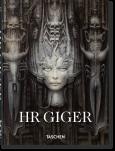
Enter a world of haunting power and dark psychedelia with this tribute to the biomechanic visions of HR Giger. The anniversary edition spans the artist’s painting, sculpture, film design, iconic album covers, and unique artist’s museum, with an essay by Andreas J. Hirsch, and an extensive biography based on contemporary quotes and Giger’s own statements.
An unprecedented collection of artists’ record covers from the 1950s to today
Since the dawn of modernism, visual and music production have had a particularly intimate relationship. From Luigi Russolo’s 1913 Futurist manifesto L’Arte dei Rumori (The Art of Noise) to Marcel Duchamp’s 1925 double-sided discs Rotoreliefs, the 20th century saw ever more fertile exchange between sounds and shapes, marks and melodies, and different fields of composition and performance.
In Francesco Spampinato’s unique anthology of artists’ record covers, we discover the rhythm of this particular cultural history. The book presents 450 covers and records by visual artists from the 1950s through to today, exploring how modernism, Pop Art, Conceptual Art, postmodernism, and various forms of contemporary art practice have all informed this collateral field of visual production and supported the mass distribution of music with defining imagery that swiftly and suggestively evokes an aural encounter.
Along the way, we find Jean-Michel Basquiat’s urban hieroglyphs for his own Tartown record label, Banksy’s stenciled graffiti for Blur, and a skewered Salvador Dalí butterfly on Jackie Gleason’s Lonesome Echo. There are insightful analyses and fact sheets alongside the covers listing the artist, performer, album name, label, year of release, and information on the original artwork. Interviews with Tauba Auerbach, Shepard Fairey, Kim Gordon, Christian Marclay, Albert Oehlen, and Raymond Pettibon add personal accounts on the collaborative relationship between artists and musicians.
“Sirs” begins the missive from our imaginary correspondent. “It’s not that I don’t love your original Big Penis Book, but that, perhaps, I love it too much. I now become anxious leaving the house without it, and long business trips are simply torture. Couldn’t you make a smaller, less obtrusive edition, still packed with men whose generative members measure over 8 inches, that doesn’t form a suspiciously large bulge in my carry-on luggage? And while you’re at it, could you make it highly affordable, since my pockets are as shallow as this premise?”
Done! The Little Big Penis Book features over 150 massively endowed models from the 1940s through the ’90s, including photos by Bob Mizer of AMG, David Hurles of Old Reliable, Rip Colt of Colt Studio, Craig Calvin Anderson of Sierra Domino, Hal Roth of Filmco, Jim Jaeger of Third World Studios, Falcon Studios, Mike Arlen, Fred Bisonnes, Carlos Quiroz, and Charles Hovland in a compact and inexpensive format.
Photos come not just from the original overstuffed 384-page edition, but from subsequent Big Penis Calendars, meaning that 30% of the content is unique to this edition. Add a reduced text to make more room for the stunning black-and-white and color photos and how could anyone—big, small, or just right—ask for a better deal?
A decade marked by adventures in futurism
Published annually from 1906 until 1980, Decorative Art, The Studio Yearbook was dedicated to the latest currents in architecture, interiors, furniture, lighting, glassware, textiles, metalware, and ceramics. Since the publications went out of print, the now hard-to-find yearbooks have become highly prized by collectors and dealers.
This volume spotlights the futuristic, experimental aesthetic of the 1970s. After the revolutions of the ’60s, the world of design and architecture became an increasingly exciting and fast-moving hotbed of ideas, rife with vehemently opposing schools and movements. In many ways it was a more extreme era for design than the previous decade.
Experimentalism was everywhere, and many projects, thought not practical, were forward-thinking visions of a new kind of decorative art and design. Various groups advocated returning to natural methods, rejecting style in favor of craft or pushing the logic of industrial living to its concrete, high-rise extreme. Decorative Art 1970s includes the work of the decade’s brightest stars, such as Afra and Tobia Scarpa, Luigi Colani, Achille Castiglioni, Kisho Kurokawa, Norman Foster, Richard Meier, and Theo Crosby.
The complete works of Hieronymus Bosch
A bird-monster devouring sinners, naked bodies in tantric contortions, a pair of ears brandishing a sharpened blade: with just 20 paintings and nine drawings to his name, Netherlandish visionary Hieronymus Bosch (c. 1450–1516) secured his place as a pillar of art history. To this day, the painter par excellence of hell and its demons continues to puzzle and enthrall scholars, artists, designers, and musicians alike.
Based on the best-selling XXL edition, which saw TASCHEN commission new and exclusive photography of details and recently restored works, this large-scale monograph presents Bosch’s complete oeuvre. Texts from art historian and Bosch expert Stefan Fischer dissect the many compelling elements that populate each scene, from hybrid creatures of man and beast to Bosch’s pictorial use of proverbs and idioms. By tying together the elusive threads of his oeuvre into one exhaustive overview, this book reveals just what it was about Bosch and his painting that proved so immensely influential.
Features:
Impeccable full-page reproductions celebrating the artist’s staggering compositional scope
Enlarged details unveiling the most intricate and bizarre scenes as much as the unsuspected technical minutiae, from subtle brush-strokes to the grain of the canvas
A fold-out spread drawn from the legendary Last Judgement
A special chapter focusing on Bosch’s most famous work, the mesmerizing and terrifying triptych The Garden of Earthly Delights
The Dylan breakthrough portfolio
Daniel Kramer’s classic Bob Dylan portfolio captures the artist’s transformative “big bang” year of 1964–65. Over the course of a year and a day, Kramer’s extraordinary access to Bob Dylan on tour, in concert, and backstage, allowed for one of the most mesmerizing photographic portfolios of any recording artist and a stunning document of Dylan breaking through to superstardom.
Highlights include the Lincoln Center’s Philharmonic Hall concert with Joan Baez; the Bringing It All Back Home recording sessions; and the now-famous concert at Forest Hills, when Dylan’s controversial transition to electric guitar exemplified his constant, cryptic state of becoming. As much a document of a seminal period of rock ’n’ roll history as of Dylan himself, the pictures also feature such compelling friends and collaborators as Joan Baez, Johnny Cash, Allen Ginsberg, and Albert Grossman.
Bob Dylan: A Year and a Day presents a curated selection of nearly 200 images, including outtakes from the Bringing It All Back Home and Highway 61 Revisited album cover shoots. Previously published by TASCHEN as a signed Collector’s Edition, this standard edition is the more affordable boon to any serious photography or Dylan fan. With stories throughout the book by Kramer, this is at once an intimate and evocative testament to a seminal photographer, to a particular point in time, and to an exceptional, mysterious artist at the moment his career went global.
The Museum Ludwig’s handbook of photography in the 20th century
The history of photography began nearly 200 years ago, but only relatively recently has it been fully recognized as a medium in its own right. Cologne’s Museum Ludwig was the first museum of contemporary art to devote a substantial section to international photography. The L. Fritz Gruber collection, from which this book is drawn, is one of the most important in Germany and one of the most representative anywhere in the world, constituting the core of the museum’s holdings.
This book provides a fascinating insight into the collection’s rich diversity; from conceptual art to abstraction to reportage, all of the major movements and genres are represented via a vast selection of the 20th century’s most remarkable photographs. From Ansel Adams to Piet Zwart, over 850 works are presented in alphabetical order by photographer, with descriptive texts and photographers’ biographical details, providing a comprehensive and indispensable overview of 20th-century photography.
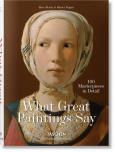
Paintings’ hidden secrets revealed
This important addition to our understanding of art history’s masterworks puts some of the world's most famous paintings under a magnifying glass to uncover their most small and subtle elements and all they reveal about a bygone time, place, and culture.
Guiding our eye to the minutiae of subject and symbolism, authors Rose-Marie and Rainer Hagen allow even the most familiar of pictures to come alive anew through their intricacies and intrigues. Is the bride pregnant? Why does the man wear a beret? How does the shadow of war hang over a scene of dancing? Along the way, we travel from Ancient Egypt through to modern Europe, from the Renaissance to the Roaring Twenties. We meet Greek heroes and poor German poets and roam from cathedrals to cabaret bars, from the Garden of Eden to a Garden Bench in rural France.
As we pick apart each painting and then reassemble it like a giant jigsaw puzzle, these celebrated canvases captivate not only in their sheer wealth of details but also in the witness they bear to the fashions and trends, people and politics, loves and lifestyles of their time.
Ten produkt jest zapowiedzią. Realizacja Twojego zamówienia ulegnie przez to wydłużeniu do czasu premiery tej pozycji. Czy chcesz dodać ten produkt do koszyka?