Ta kategoria dedykowana jest współczesnym czytelniczkom literatury kobiecej. Bardzo szeroki wybór romansów, kryminałów, powieści obyczajowe, poruszająca literatura kobieca, erotyki, harlequiny polskich i zagranicznych autorów. Każda lubiąca czytać kobieta znajdzie coś szczególnego dla siebie.
Polecamy literaturę Sergiusza Piaseckiego, Stanisława Srokowskiego, Diany Palmer czy w końcu Blanki Lipińskiej.
Światowy fenomen literacki i jedna z najgłośniejszych powieści XXI wieku.Sally Rooney, nazywana Salingerem doby snapchata, w "Normalnych ludziach" opowiada o trudnej miłości wplątanej w skomplikowane, zhierarchizowane relacje organizujące świat, w którym nastoletni bohaterowie muszą się odnaleźć. Rooney udowadnia, że o miłości nie napisano jeszcze ostatniego słowa.Marianne i Connell żyją tuż obok siebie, choć pochodzą z dwóch różnych światów. Mieszkają w niewielkim mieście, jednym z tych, z których chce się jak najszybciej uciec. Chodzą do tej samej szkoły, ale na korytarzu mijają się bez słowa, unikają swoich spojrzeń, chociaż łączy ich więcej niż wspólne lekcje. Ukrywanie tej znajomości nie jest trudne, komplikacje zaczynają się wtedy, gdy między dwojgiem nastolatków budzi się uczucie.Powieść "Normalni ludzie" nominowana była do Nagrody Bookera oraz otrzymała Costa Book Award w 2019 r.Na podstawie książki powstał uwielbiany na całym świecie serial z Paulem Mescalem i Daisy Edgar-Jones w roli głównej."To przyszły klasyk literatury"The Guardian"Fascynująca historia miłosna dwudziestego pierwszego wieku" Times Literary Supplement
This vivid and fascinating collection of propaganda spans over a century – a visual feast illustrating how persuasion, manipulation and fear were used to influence populations around the world.
Do you know what propaganda looks like?
A mural showing Saddam Hussein on horseback.
A colossal cut-out of Benito Mussolini mounted on Milan Cathedral.
A film of North Korea’s Kim Jong Un parading an intercontinental ballistic missile.
A Pakistani newspaper advertisement calling for ‘Jehad’ (sic).
A soldier firing condoms from his gun in a Ugandan AIDS awareness and prevention campaign.
A traditional Azerbaijani rug celebrating the achievements of Soviet space travel, with portraits of Gagarin, Tereshkova (and of course Lenin).
Juxtaposing material from conflicting ideologies, Propagadopolis presents the broadest range of shocking, unusual and visually arresting images, encompassing all regions and eras of the modern age to demonstrate how propaganda has been wielded to evoke emotions, rally support or instill fear – to leave an indelible mark on the collective consciousness.
Extended captions explain the fascinating stories behind this material, contextualising the strategies used by governments, agencies and individuals seeking to influence, deceive and demoralise through the use of propaganda.
Containing many previously unpublished examples and with an enlightening introduction from Robert Peckham, author of Fear: An Alternative History of the World (2023), Propagandopolis is an essential visual guide to the enduring potency of the most pervasive, manipulative and persuading images of our time.
"Popioły" to jedno z najważniejszych dzieł Stefana Żeromskiego, wpisujące się w nurt literatury Młodej Polski. Powieść, która zaczęła ukazywać się w odcinkach w 1902 roku na łamach warszawskiego "Tygodnika Ilustrowanego," stanowi epicką panoramę życia Polaków pod zaborami w epoce napoleońskiej. Autor z niezwykłą wrażliwością i precyzją oddaje atmosferę tamtych czasów, łącząc losy fikcyjnych bohaterów z autentycznymi wydarzeniami historycznymi. Stefan Żeromski, korzystając z bogatych zbiorów historycznych, tworzy monumentalne dzieło, które można porównać do "Wojny i pokoju" Lwa Tołstoja. Podobnie jak rosyjski mistrz, S.Żeromski kreśli paletę postaci, od prostych żołnierzy po wybitnych dowódców, opisując ich duchowe rozterki, moralne wybory związane z walką o niepodległość. Główny bohater, Rafał Olbromski, to postać symboliczna, reprezentująca młode pokolenie Polaków poszukujących sensu życia w trudnych realiach epoki. Jego droga - od młodzieńczej brawury, przez udział w wojnach napoleońskich, po głębokie refleksje nad istotą patriotyzmu - jest metaforą przemian duchowych całego narodu. Równolegle do jego losów, Żeromski przedstawia historie innych postaci, takich jak Krzysztof czy książę Gintułt, które wnoszą do powieści dodatkowe perspektywy i wzbogacają jej wymowę. "Popioły" nie są jedynie powieścią historyczną, lecz także głęboką analizą moralną i filozoficzną. Żeromski zadaje fundamentalne pytania o cenę wolności, sens poświęcenia i wartość życia ludzkiego w obliczu wielkich przemian. Wątki wojenne przeplatają się z refleksjami nad losem jednostki w kontekście narodowych dążeń, co czyni tę powieść niezwykle aktualną i uniwersalną.Kompozycja dzieła, oparta na luźnych epizodach i dynamicznych scenach batalistycznych, pozwala czytelnikowi zanurzyć się w różnorodności ówczesnego życia. Żeromski mistrzowsko operuje językiem, tworząc plastyczne opisy przyrody, pełne detali sceny bitewne i sugestywne dialogi, które przybliżają ducha epoki."Popioły" to nie tylko hołd złożony polskiej historii, ale także uniwersalne dzieło literackie, które zmusza do refleksji nad losem jednostki i narodu. Powieść, mimo swojej monumentalnej formy, zachwyca lekkością stylu i głębią przesłania, pozostając jednym z najważniejszych osiągnięć literatury polskiej. O autorze: Stefan Żeromski (1864-1925) był polskim prozaikiem, dramaturgiem i publicystą, który pochodził z zubożałej rodziny szlacheckiej. W swoich dziełach poruszał tematy społeczne i moralne. Stefan Żeromski napisał wiele ważnych dzieł, które znacząco wpłynęły na literaturę polską. Do najbardziej znaych utworów należą:"Ludzie bezdomni", "Dzieje grzechu", "Przedwiośnie" i wiele innych. Po wojnie Żeromski stał się jedną z najważniejszych postaci literatury polskiej, zdobywając uznanie zarówno w kraju, jak i za granicą. Zmarł 20 listopada 1925 roku w Warszawie.
"Popioły" to jedno z najważniejszych dzieł Stefana Żeromskiego, wpisujące się w nurt literatury Młodej Polski. Powieść, która zaczęła ukazywać się w odcinkach w 1902 roku na łamach warszawskiego "Tygodnika Ilustrowanego," stanowi epicką panoramę życia Polaków pod zaborami w epoce napoleońskiej. Autor z niezwykłą wrażliwością i precyzją oddaje atmosferę tamtych czasów, łącząc losy fikcyjnych bohaterów z autentycznymi wydarzeniami historycznymi. Stefan Żeromski, korzystając z bogatych zbiorów historycznych, tworzy monumentalne dzieło, które można porównać do "Wojny i pokoju" Lwa Tołstoja. Podobnie jak rosyjski mistrz, S.Żeromski kreśli paletę postaci, od prostych żołnierzy po wybitnych dowódców, opisując ich duchowe rozterki, moralne wybory związane z walką o niepodległość. Główny bohater, Rafał Olbromski, to postać symboliczna, reprezentująca młode pokolenie Polaków poszukujących sensu życia w trudnych realiach epoki. Jego droga - od młodzieńczej brawury, przez udział w wojnach napoleońskich, po głębokie refleksje nad istotą patriotyzmu - jest metaforą przemian duchowych całego narodu. Równolegle do jego losów, Żeromski przedstawia historie innych postaci, takich jak Krzysztof czy książę Gintułt, które wnoszą do powieści dodatkowe perspektywy i wzbogacają jej wymowę. "Popioły" nie są jedynie powieścią historyczną, lecz także głęboką analizą moralną i filozoficzną. Żeromski zadaje fundamentalne pytania o cenę wolności, sens poświęcenia i wartość życia ludzkiego w obliczu wielkich przemian. Wątki wojenne przeplatają się z refleksjami nad losem jednostki w kontekście narodowych dążeń, co czyni tę powieść niezwykle aktualną i uniwersalną.Kompozycja dzieła, oparta na luźnych epizodach i dynamicznych scenach batalistycznych, pozwala czytelnikowi zanurzyć się w różnorodności ówczesnego życia. Żeromski mistrzowsko operuje językiem, tworząc plastyczne opisy przyrody, pełne detali sceny bitewne i sugestywne dialogi, które przybliżają ducha epoki."Popioły" to nie tylko hołd złożony polskiej historii, ale także uniwersalne dzieło literackie, które zmusza do refleksji nad losem jednostki i narodu. Powieść, mimo swojej monumentalnej formy, zachwyca lekkością stylu i głębią przesłania, pozostając jednym z najważniejszych osiągnięć literatury polskiej. O autorze: Stefan Żeromski (1864-1925) był polskim prozaikiem, dramaturgiem i publicystą, który pochodził z zubożałej rodziny szlacheckiej. W swoich dziełach poruszał tematy społeczne i moralne. Stefan Żeromski napisał wiele ważnych dzieł, które znacząco wpłynęły na literaturę polską. Do najbardziej znaych utworów należą:"Ludzie bezdomni", "Dzieje grzechu", "Przedwiośnie" i wiele innych. Po wojnie Żeromski stał się jedną z najważniejszych postaci literatury polskiej, zdobywając uznanie zarówno w kraju, jak i za granicą. Zmarł 20 listopada 1925 roku w Warszawie.
Julia ma czterdzieści dwa lata, trójkę dzieci i jest zwyczajną żoną i matką. Jej życie to zlepek rytuałów, monotonnych i przewidywalnych. Świat Julii staje na głowie, kiedy podsłuchuje rozmowę dwóch kobiet, bez skrępowania opowiadających o pozamałżeńskim życiu seksualnym.Julia nie lubi seksu, uważa, że jej ciało dawno już uległo wyziębieniu. Trochę wbrew sobie, a trochę z ciekawości nawiązuje wirtualną przyjaźń na jednym z portali randkowych. Kiedy umawia się na pierwsze spotkanie, rusza domino z tysiąca klocków. Tego procesu nie można zatrzymać, nawet jeśli tak nakazuje rozsądek. Julia na nowo odkrywa siebie, po raz pierwszy mówi głośno o swoich potrzebach, poznaje własne ciało, siłę dotyku i budzi uśpione pragnienia. Przypomina sobie, że jest kobietą.Dlaczego kobiety czasem zdradzają? Czego szukają? Czego się wstydzą? Jak wiele z nich jest zamrożonych i nieświadomych własnej seksualności?I czy taka historia może zakończyć się happy endem?
What if everything you’ve been told about money is wrong?
Have you ever been told that cutting your spending is the key to financial freedom?
Or that only a fool would try to make money by picking stocks?
Or that buying your home is always a smart investment?
Most of us have heard these truisms from friends, from family, even from financial experts. They are held up as nuggets of timeless wisdom. There’s just one problem: none of them is true.
Over the last decade, the world of money has transformed – but the mainstream financial advice hasn’t caught up. The result: most of us are being fed money advice that will only take us further from our financial goals.
Here, a leading investor debunks seven of the most common misconceptions about money, and explains why the true path to wealth is dramatically different from what you’ve been told. Confounding and eminently practical, Seven Myths About Money sketches out a radically new route to financial freedom – one fit for the twenty-first century.
Long simmering chemistry is released when a hurricane forces two exes to weather the storm in a house they used to share.
Hot shot DC lawyer Meena is about to get engaged to the perfect man. The only hitch? She is already married…
Which is why she ends up travelling home to convince her first-love-slash-husband (courtesy of one slightly too wild night in Vegas nearly a decade ago) to finally agree to get UN-hitched.
But life loves to throw curve balls, or in this case, a good old natural disaster. Meena touches down just in time to find out a hurricane hitting Houston - all flights are cancelled and the only place she can take refuge? Her soon-to-be-ex-husband's home.
Will the storm force them to face what happened all those years ago? And might this be the best worst thing that has ever happened to them
It is late September in 2001 and the walls of New York are papered over with photos of the missing. Cora Brady’s father is there, the poster she made taped to columns and bridges. Her mother died long ago and now, orphaned on the cusp of adulthood, Cora is adrift and alone. Soon, a letter will arrive with the offer of a new life: far out on the ragged edge of Ireland, in the town where her parents were young, an estranged aunt can provide a home and fulfil a long-forgotten promise. There the story of Cora's family is hidden, and in her presence will begin to unspool…
An essential, immersive debut from an astonishing new voice, Confessions traces the arc of three generations of women as they experience in their own time the irresistible gravity of the past: its love and tragedy, its mystery and redemption, and, in all things intended and accidental, the beauty and terrible shade of the things we do.
The Soviet Don Quixote, Chevengur is now seen by many Russian writers as Russia's greatest novel of the last century.
'Platonov is an extraordinary writer, perhaps the most brilliant Russian writer of the twentieth century' New York Review of Books
The Soviet Don Quixote, Chevengur is now seen by many Russian writers as Russia's greatest novel of the last century. This is the first English version to convey its subtlety and depth.
Zakhar Pavlovich comes from a world of traditional crafts to work as a train mechanic, motivated by his belief in the transformative power of industry. His adopted son, Sasha Dvanov, embraces revolution, which will transform everything: the words we speak and the lives we live, souls and bodies, the soil underfoot and the sun overhead.
Seeking communism, Dvanov joins up with Stepan Kopionkin, a warrior for the cause whose steed is the fearsome cart horse Strength of the Proletariat. Together they cross the steppe, meeting counter-revolutionaries, desperados and visionaries of all kinds. At last they reach the isolated town of Chevengur. There communism is believed to have been achieved because everything that is not communism has been eliminated. And yet even in Chevengur the revolution recedes from sight.
Comic, ironic, grotesque, disturbingly poetic in its use of language and profoundly sorrowful, Chevengur is a revolutionary novel about revolutionary ardour and despair. Unpublished during Andrey Platonov’s life, it is now one of the most celebrated Russian novels, and the most ambitious and moving of Platonov’s recreations of a world undergoing revolutionary transformation.
'It was from the novel Chevengur that I learned to create \"literary worlds\". Platonov is a self-taught literary jeweller, a true believer who built dystopias. His love for his characters is instantly conveyed to readers' Andrey Kurkov
Czy w grze pełnej złudzeń znajdzie się miejsce na miłość?Uporządkowany świat Asyi runął, gdy poznała prawdę o swoim ojcu. Andriej Karranov zniszczył życie jej ukochanego Maksa oraz wielu niewinnych ludzi. Zdruzgotana dziewczyna zostaje na jego rozkaz zamknięta wraz z Amandą w willi w środku lasu. Ich strażnik, Kamil, odsłania przed nią swoją historię, wyjaśniając związki łączące go z Karranovem. Czy okaże się sojusznikiem Asyi, czy wrogiem?Zdruzgotana dziewczyna musi podjąć grę ojca, aby dać współpracującemu z wywiadem Maksowi czas na zniszczenie imperium finansowego od środka. Czy para ma szansę w starciu z silniejszymi od nich przeciwnikami?Ta historia jest naprawdę SWEET. Sugerowany wiek: 16+.
This bold new take on the life and ideas of political philosopher Hannah Arendt explores her lessons for living in an age of uncertainty
This bold new take on the life and ideas of political philosopher Hannah Arendt explores her lessons for living in an age of uncertainty
'Compelling and original' OBSERVER
'An absorbing new biography... Admirable' ECONOMIST
'Invigorating and insightful' FINANCIAL TIMES
The violent unease of today's world would have been all too familiar to Hannah Arendt. Tyranny, occupation, disenchantment, post-truth politics, conspiracy theories, racism, mass migration, the banality of evil: she had lived through them all.
Born in the first decade of the last century, Arendt escaped fascist Europe to make a new life for herself in America, where she became one of the world's most influential - and controversial - public intellectuals. She wrote about power and terror, exile and love, and above all about freedom. Questioning - thinking - was her first defence against tyranny. In place of the forces of darkness and insanity, she pitched a politics of plurality, spontaneity and defiance. Loving the world, Arendt taught, meant finding the courage to protect it.
Written with passion and authority, Lyndsey Stonebridge's We Are Free to Change the World illuminates Arendt's life and work and its urgent dialogue with our troubled present. It calls on each of us to think our way, as Hannah Arendt did - unflinchingly, lovingly and defiantly - through our own unpredictable times.
A propulsive narrative history of the motivation and mentality behind the Nazis and their supporters.
How could the Nazis have committed the crimes they did? Why did commandants of concentration and death camps willingly – often enthusiastically – oversee mass murder? How could ordinary Germans have tolerated the removal of the Jews? In THE NAZI MIND, bestselling author Laurence Rees combines history and the latest research in psychology to help answer some of the most perplexing questions surrounding the Second World War and the Holocaust.
Ultimately, he delves into the darkness to explain how and why these people were capable of committing the worst crime in the history of the world. Rees traces the rise and eventual fall of the Nazis through the lens of ‘twelve warnings’ – from talk about ‘them’ and ‘us’ to the escalation of racism – whilst also highlighting signs to look out for in present day leaders.
Rees uses previously unpublished testimony from former Nazis and those who grew up in the Nazi system, and in-depth psychological insights including cutting edge work on obedience, authority and the brain. THE NAZI MIND is a revelatory new way of understanding how so many people committed the most appalling crime of the 20th century.
The compelling and heartrending new novel from the award-winning author of Norwegian By Night and How To Find Your Way In The Dark
We will lie, cheat, steal, fight, sin... Whatever it takes to survive.
The bombing of Rome in 1943 leaves fourteen-year-old Massimo orphaned and with no choice but to set out on a journey to discover any remaining relatives in Naples. A chance meeting with the mysterious and charismatic Pietro Houdini will deliver both of them to the doors of the abbey of Monte Cassino, a centuries-old haven of contemplation, learning and art. But war has no time for such niceties and before long the abbey is threatened by the relentless Allied advance. In the face of the coming cataclysm, Pietro and Massimo must do what they can to save the monastery's priceless art from oblivion.
To do so, they must learn to dissemble, to disguise, to outwit, all skills that evidently Pietro has in spades, but as their cherished haven edges ever closer to war, it becomes clear that Massimo is not without a surprise or two either...
The Curse of Pietro Houdini is a sweeping tale of resilience, hope and survival which is at once an action-packed adventure heist, an imaginative chronicle of forgotten history and a philosophical coming-of-age story, perfect for fans of All the Light We Cannot See, City of Lies and A Thousand Splendid Suns.
From acclaimed critic, novelist and academic W. G. Sebald, author of Austerlitz and The Rings of Saturn, a collection of essay on the Austrian writers who meant so much to him
As a German in self-chosen exile from his country of birth, Sebald found a particular affinity with these writers from a neighbouring nation. The traumatic evolution of Austria from vast empire to diminutive Alpine republic, followed by its annexation by Germany, meant that concepts such as ‘home/land’, ‘borderland’ and ‘exile’ occupy a prominent role in its literature, just as they would in Sebald’s own.
Through a series of remarkable close readings of texts by Bernhard, Stifter, Kafka, Handke, Roth and more, Sebald charts both the pathologies which so often drove their work and the seismic historical forces which shaped them. This sequence of essays will be a revelation to Sebald’s English-language readers, tracing as they do so many of the themes which animate his own literary writings, to which these essays form a kind of prelude.
The beloved Australian classic, published in a stunning Penguin Clothbound Classics edition for the first time
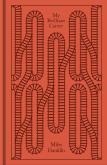
Miles Franklin’s debut novel follows the vivacious and rebellious sixteen-year-old Sybylla Melvyn – closely modelled on Franklin herself – as she fights to break free of restrictive bush life. Growing up on her parents’ outback farm, Sybylla is desperate to read, write, sing and achieve great things. Yet her aspirations for a ‘brilliant career’ are persistently thwarted, first by the arduous demands of rural family life, and later by the shackles of a proposed conventional marriage to the wealthy Harold Beecham. With only her brilliant, conflicted mind to guide her, Sybylla is forced to define a life on her own terms.
My Brilliant Career is acclaimed for capturing the spirit of Australia at the turn of the twentieth century. The struggles of its fiery, precocious protagonist shine a light on the emergent women’s rights and suffrage movement during this period, and memorably evoke the intensity of youth.
Your mind is a magnet – and you are the one who controls it
You are a walking magnet, constantly drawing things into your reality. But what if the things you attract don't reflect your true desires?
In this book, meditation teacher and personal growth coach Rochelle Fox guides you through the secrets of magnetism, equipping you with the ultimate law of attraction toolkit to master your subconscious and turn ambition into reality.
Tap into the three pillars of magnetism – mindset to calm the chaos of your past, meditation to make room for new in the present, and manifesting to curate your dream future.
Once you master the power of your mind, it’s you who gets to decide what happens next.
A lost princess and a vanished world: a remarkable true story that moves from the Punjab of the Raj to 1930s Paris and the cataclysm of the Second World War
A lost princess and a vanished world: a remarkable true story that moves from the Punjab of the Raj to 1930s Paris and the Second World War
‘Remarkable and compelling’ Edmund de Waal
‘Thoroughly engaging’ Kamila Shamsie
In a Mumbai museum in 2007, Livia Manera Sambuy encounters a photograph that will change her life forever.
The caption claims that the Punjabi princess Amrit Kaur sold her jewels in occupied Paris to save Jewish lives, only to be arrested by the Gestapo and sent to a concentration camp where she died within a year.
For Livia, this marks the beginning of a compulsive search for the truth as she delves into the history of the British Raj, the diamonds and sapphires of the twentieth-century aristocracy, and the lives of extraordinary figures: bankers, jewellers, explorers and spies.
From the New York Times bestselling author of Black Cake comes a stunningly beautiful tale about love, family and seeking a new life in the aftermath of tragedy
Ebby Freeman’s life has always been marked with tragedy. First, the death of her brother Baz, killed in an anonymous armed robbery when they were teenagers. Then her perfect fiancé Henry deserting her on the day of their wedding, without an explanation.
When Ebby arrives in a sleepy French village, she believes she’s found an opportunity for healing and anonymity. Until Henry appears, staying at the neighbouring property with his beautiful new girlfriend in tow.
It’s the worst situation that Ebby can imagine. But might it give her a chance to piece together the fragments of her past – and finally embrace her future?
Ten produkt jest zapowiedzią. Realizacja Twojego zamówienia ulegnie przez to wydłużeniu do czasu premiery tej pozycji. Czy chcesz dodać ten produkt do koszyka?