Ta kategoria dedykowana jest współczesnym czytelniczkom literatury kobiecej. Bardzo szeroki wybór romansów, kryminałów, powieści obyczajowe, poruszająca literatura kobieca, erotyki, harlequiny polskich i zagranicznych autorów. Każda lubiąca czytać kobieta znajdzie coś szczególnego dla siebie.
Polecamy literaturę Sergiusza Piaseckiego, Stanisława Srokowskiego, Diany Palmer czy w końcu Blanki Lipińskiej.
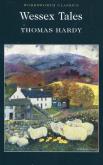
Wessex Tales was the first collection of Hardy's short stories, and they reflect the experience of a novelist at the height of his powers. These seven tales, in which characters and scenes are imbued with a haunting realism, show considerable diversity of content, form and style, and range from fantasy to realism and from tragedy to comedy.
In insisting on the unusual nature of any story worth the telling, and with his gift for irony and compassion, Hardy achieves more in the genre of the short story than any English novelist before him.
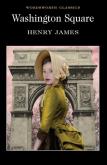
Washington Square marks the culmination of James's apprentice period as a novelist. With sharply focused attention upon just four principal characters, James provides an acute analysis of middle-class manners and behaviour in the New York of the 1870's, a period of great change in the life of the city. This change is explored through the device of setting the novel's action during the 1840s, similarly a period of considerable turbulence as the United States experienced the onset of rapid commercial and industrial expansion.
Through the relationships between Austin Sloper, a celebrated physician, and his sister Lavinia Penniman, his daughter Catherine, and Catherine's suitor, Morris Townsend, James observes the contemporary scene as a site of competing styles and performances where authentic expression cannot be articulated or is subject to suppression.
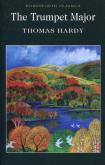
Hardy distrusted the application of nineteenth-century empiricism to history because he felt it marginalized important human elements. In The Trumpet-Major, the tale of a woman courted by three competing suitors during the Napoleonic wars, he explores the subversive effects of ordinary human desire and conflicting loyalties on systematized versions of history.
With a new Introduction by Cedric Watts, M.A., Ph.D., Emeritus Professor of English, University of Sussex.
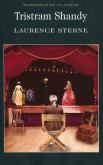
Laurence Sterne's The Life and Opinions of Tristram Shandy, Gentleman is a huge literary paradox, for it is both a novel and an anti-novel. As a comic novel replete with bawdy humour and generous sentiments, it introduces us to a vivid group of memorable characters, variously eccentric, farcical and endearing. As an anti-novel, it is a deliberately tantalising and exuberantly egoistic work, ostentatiously digressive, involving the reader in the labyrinthine creation of a purported autobiography.
This mercurial eighteenth-century text thus anticipates modernism and postmodernism. Vibrant and bizarre, Tristram Shandy provides an unforgettable experience. We may see why Nietzsche termed Sterne 'the most liberated spirit of all time'.
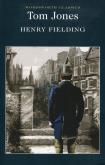
Tom Jones is widely regarded as one of the first and most influential English novels. It is certainly the funniest. Tom Jones, the hero of the book, is introduced to the reader as the ward of a liberal Somerset squire. Tom is a generous but slightly wild and feckless country boy with a weakness for young women.
Misfortune, followed by many spirited adventures as he travels to London to seek his fortune, teach him a sort of wisdom to go with his essential good-heartedness.
This `comic, epic poem in prose' will make the modern reader laugh as much as it did his forbears. Its biting satire finds an echo in today's society, for as Doris Lessing recently remarked `This country becomes every day more like the eighteenth century, full of thieves and adventurers, rogues and a robust, unhypocritical savagery side-by-side with people lecturing others on morality'.
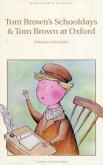
Lively and mischievous, idle and brave, Tom Brown is both the typical boy of his time and the perennial hero celebrated by authors as diverse as Henry Fielding (in Tom Jones) and Alec Waugh (in The Loom of Youth).
The book describes Tom's time at Rugby School from his first football match, through his troubled adolescence when he is savagely bullied by the unspeakable Flashman, to his departure for a wider world as a confident young man. This classic tale of a boy's schooldays under the benevolent eye of the renowned Dr Arnold still retains the appeal for which it was acclaimed on its first publication in 1857.
In its less well-known sequel, Tom Brown at Oxford, we follow our hero to St Ambrose's College, and, in sharing his undergraduate experiences, gain a vivid impression of university life in the mid nineteenth century.
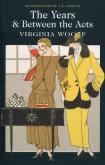
This volume brings together Virginia Woolf's last two novels, The Years (1937) which traces the lives of members of a dispersed middle-class family between 1880 and 1937, and Between the Acts (1941), an account of a village pageant in the summer preceding the Second World War which successfully interweaves comedy, satire and disturbing observation.
Rewriting the traditional family saga and the pageant, these unsettling novels provide extraordinary critiques of Englishness and English identity while pursuing compelling existentialist and psychological themes such as the nature of time, memory, personal relationships and sexual desire. Their tightly constructed narratives enable the reader to experience the fragmented lives of their characters and the difficulties that they have in communicating with each other and even understanding themselves. Read together, these novels illuminate each other in ways that will engage both the student and the general reader.
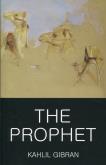
“Let there be spaces in your togetherness, And let the winds of the heavens dance between you. Love one another but make not a bond of love: Let it rather be a moving sea between the shores of your souls. Fill each other's cup but drink not from one cup. Give one another of your bread but eat not from the same loaf. Sing and dance together and be joyous, but let each one of you be alone, Even as the strings of a lute are alone though they quiver with the same music. Give your hearts, but not into each other's keeping. For only the hand of Life can contain your hearts. And stand together, yet not too near together: For the pillars of the temple stand apart, And the oak tree and the cypress grow not in each other's shadow.”
― Khalil Gibran, The Prophet
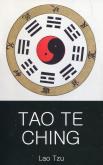
Dating from around 300BC, Tao Te Ching is the first great classic of the Chinese school of philosophy called Taoism. Within its pages is summed up a complete view of the cosmos and how human beings should respond to it. A profound mystical insight into the nature of things forms the basis for a humane morality and vision of political utopia.
The ideas in this work constitute one of the main shaping forces behind Chinese spirituality, art and science, so much so that no understanding of Chinese civilisation is possible without a grasp of Taoism. This edition presents the authoritative translation by Arthur Waley, with a new Introduction reflecting recent developments in the interpretation of the work.
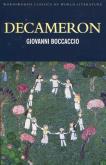
A new version of John Payne's Victorian translation, with an Introduction by Cormac O Cuilleanain.
1348. The Black Death is sweeping through Europe. In Florence, plague has carried off one hundred thousand people. In their Tuscan villas, seven young women and three young men tell tales to recreate the world they have lost, weaving a rich tapestry of comedy, tragedy, ribaldry and farce.
Boccaccio's Decameron recasts the storytelling heritage of the ancient and medieval worlds into perennial forms that inspired writers from Chaucer and Shakespeare down to our own day. Boccaccio makes the incredible believable, with detail so sharp we can look straight into the lives of people who lived six hundred years ago. His Decameron hovers between the fading glories of an aristocratic past - the Crusades, the Angevins, the courts of France, the legendary East - and the colourful squalor of contemporary life, where wives deceive husbands, friars and monks pursue fleshly ends, and natural instincts fight for satisfaction.
Here are love and jealousy, passion and pride - and a shrewd calculation of profit and loss which heralds the rise of a dynamic merchant class. These stories show us early capitalism during a moment of crisis and revelation.
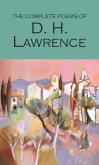
Lawrence's reputation as a novelist has often meant that his achievements in poetry have failed to receive the recognition they deserve. This edition brings together, in a form he himself sanctioned, his Collected Poems of 1928, the unexpurgated version of Pansies, and Nettles, adding to these volumes the contents of the two notebooks in which he was still writing poetry when he died in 1930.
It therefore allows the reader to trace the development of Lawrence as a poet and appreciate the remarkable originality and distinctiveness of his achievement. Not all the poems reprinted here are masterpieces but there is more than enough quality to confirm Lawrence's status as one of the greatest English writers of the twentieth century.
During his life, Geoffrey Chaucer (born c.1340) was courtier, diplomat, revenue collector, administrator, negotiator, overseer of building projects, landowner and knight of the shire. He was servant, retainer, husband, friend and father. Whilst he was doing and ‘being’ all of these things, he was writing. Not only did he write in English - for princes, friends, family and, presumably, for his own pleasure – but his knowledge of French and Italian enabled him to engage with the works of notable French poets such as Eustache Deschamps, and also with the Italian works of Petrarch, Dante and Boccaccio, an understanding which he used to enrich and develop his own language.
It was Boccaccio’s Decameron which inspired Chaucer, in the 1390s, to begin work on The Canterbury Tales, which was still unfinished at his death in October 1400. It tells the story of a group of 30 pilgrims who meet at the Tabard Inn in Southwark, on the south bank of the Thames opposite the city of London, and travel together to visit the then famous shrine of St Thomas Becket in Canterbury cathedral. The tavern host, who accompanies them, suggests that they amuse one another along the way by telling stories. There will be a prize for this: the best storyteller will get a free meal in the tavern on their return. The stories told by the pilgrims range from bawdy comedies through saints’ lives and moral tracts to courtly romances, but are always delivered with a generous helping of Chaucer’s own sly wit and ironic humour. Although based on the stereotypes of ‘estates satire’, his pilgrims appear as individuals who can be recognised by their audience. Chaucer succeeds in his aim of producing an overview of his times and their culture, for posterity, in the manner of Italian, proto-Renaissance, writers. In the decades after his death, Chaucer was recognised and elevated by a new generation of writers to a position of prominence in the emerging canon of English writing, from which he ultimately became known as ‘the Father of English Literature’.
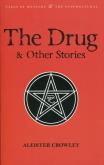
Crowley was a successful critic, editor and author of fiction from 1908 to 1922, and his short stories are long overdue for discovery. Of the forty-nine stories in the present volume, only thirty were published in his lifetime. Most of the rest appear here for the first time.
Like their author, Crowley's stories are fun, smart, witty, thought-provoking and sometimes unsettling. They are set in places he had lived and knew well: Belle Epoque Paris, Edwardian London, pre-revolutionary Russia and America during the first World War. The title story The Drug stands as one of the first accounts–if not the first–of a psychedelic experience. His Black and Silver is a knowing early noir discovery that anticipates an entire genre. Atlantis is a masterpiece of occult fantasy, a dark satire that can stand with Samuel Butler's Erewhon . Frank Harris considered The Testament of Magdalen Blair the most terrifying tale ever written.
‘They were removing the stones quietly, one by one, from the centuried wall. And then, as the breach became large enough, they came out into the laboratory in single file; led by a stalking thing with a beautiful head made of wax.’
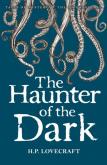
From the dark, mind-expanding imagination of H P Lovecraft, Wordsworth presents a third volume of tales penned by the greatest horror writer of the 20th Century. Here are some of Lovecraft’s weirdest flesh-creeping masterpieces, including Pickman's Model, The Shunned House, his famous serial Herbert West – Reanimator, and several classic tales from the Cthulhu Mythos, in which mankind is subjected to the unimaginable terrors known only to those who have read from the forbidden Necronomicon.
Also included in this compelling collection are the complete Randolph Carter stories, chronicling his adventures in this world and the realm of his dreams, where he faces perils beyond comprehension.
COUNT LEO TOLSTOY (1828-1910) is best known for War and Peace and Anna Karenina, commonly regarded as amongst the greatest novels ever written. He also, however, wrote many masterly short stories, and this volume contains four of the longest and best in distinguished translations that have stood the test of time.
In the early story Family Happiness, Tolstoy explores courtship and marriage from the point of view of a young wife. In The Kreutzer Sonata he gives us a terrifying study of marital breakdown, in The Devil a powerful depiction of the power of sexual temptation, and, in perhaps the finest of all, The Death of Ivan Ilyich, he portrays the long agony of a man gradually coming to terms with his own mortality.
This volume also includes an Introduction and Notes written specially for this Wordsworth edition by Dr Tim Cook, formely lecturer in literature at the Universities of Kingston and Ulster. Previous work contributed by Dr Cook for Wordsworth includes an introduction and notes to Charles Dickens' Nicholas Nickleby.
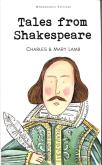
Tales from Shakespeare by Charles and Mary Lamb was written to be an 'introduction to the study of Shakespeare', but are much more entertaining than that. All of Shakespeare's best-loved plays, comic and tragic, are retold in a clear and robust style, and their literary quality has made them popular and sought-after ever since their first publication in 1807.
This edition contains the delightful pen-and-ink drawings of Arthur Rackham.
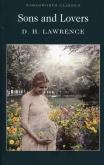
`When you have experienced Sons and Lovers you have lived through the agonies of the young Lawrence striving to win free from his old life'.
Richard Aldington
This novel is Lawrence's semi-autobiographical masterpiece in which he explores emotional conflicts through the protagonist, Paul Morel, and his suffocating relationships with a demanding mother and two very different lovers.
Lawrence's novels are perhaps the most powerful exploration in the genre in English of family, class, sexuality and relationships in youth and early adulthood
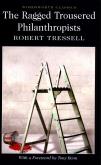
The Ragged Trousered Philanthropists is a classic representation of the impoverished and politically powerless underclass of British society in Edwardian England, ruthlessly exploited by the institutionalized corruption of their employers and the civic and religious authorities.
Epic in scale, the novel charts the ruinous effects of the laissez-faire mercantilist ethics on the men, women, and children of the working classes, and through its emblematic characters, argues for a socialist politics as the only hope for a civilized and humane life for all. It is a timeless work whose political message is as relevant today as it was in Tressell's time. For this it has long been honoured by the Trade Union movement and thinkers across the political spectrum.
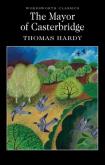
None of the great Victorian novels is more vivid and readable than The Mayor of Casterbridge. Set in the heart of Hardy's Wessex, the 'partly real, partly dream country' he founded on his native Dorset, it charts the rise and self-induced downfall of a single 'man of character'.
The fast-moving and ingeniously contrived narrative is Shakespearian in its tragic force, and features some of the author's most striking episodes and brilliant passages of description.
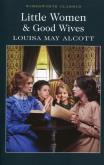
Life in the March household is full of adventures and accidents as the four very different March sisters follow their varying paths to adulthood, always maintaining the special bond between them. Sensible Meg, impetuous Jo, shy Beth and artistic Amy each have to confront different challenges as they grow up together and attempt to learn how to be both happy and good.
Ten produkt jest zapowiedzią. Realizacja Twojego zamówienia ulegnie przez to wydłużeniu do czasu premiery tej pozycji. Czy chcesz dodać ten produkt do koszyka?