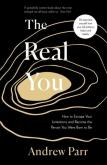
The only thing holding most of us back is ourselves, but you are capable of change and this revolutionary method will show you how to become your best self.
Having practised as a therapist for almost thirty years, Andrew Parr has helped thousands of people to break free of their self-sabotaging thoughts and achieve things they never thought possible: from pay rises to weight loss, and from quitting smoking to overcoming insomnia. His life-changing ESCAPE Method combines the most effective aspects of hypnotherapy, psychotherapy, coaching and CBT, enabling you to identify and resolve problematic mental patterns more easily than with traditional talking therapy.
He explains that throughout our lives we become conditioned to believe things like 'I'm not good enough', 'I don't deserve to be happy', 'I don't belong here' and, left unchecked, these thoughts can leave us feeling incapable, unfulfilled and unhappy. But this book shows us that, no matter what is causing those problematic beliefs, the real, capable and confident you is hidden just beneath the surface and gives us the tools to de-hypnotize ourselves of those beliefs.
Whether you want to break free from your obstructive thoughts, feel confident in your abilities, reclaim aspects of your life, succeed at your goals or simply better understand yourself, with the ESCAPE Method you will feel free, in control and become the person you were born to be.
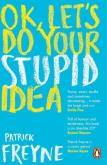
Patrick Freyne has tried a lot of stupid ideas in his life. Now, he is here to tell you about them: like the time (aged 5) he opened a gate and let a horse out of its field, just to see what would happen; or the time (aged 19) he jumped out of a plane for charity, even though he didn't much care about the charity and was sure he'd end up dead; or the time (aged old enough to know better) he used a magazine as a funnel for fuel when the petrol cap on his band's van broke.
He has also learned a few things: about the power of group song; about the beauty of physically caring for another human being; about childlessness; about losing friends far too young. Life as seen through the eyes of Patrick Freyne is stranger, funnier and a lot more interesting than life as we generally know it. Like David Sedaris or Nora Ephron, he creates an environment all his own - fundamentally comic, sometimes moving, always deeply humane. OK, Let's Do Your Stupid Idea is a joyous reading experience from an instantly essential new writer.
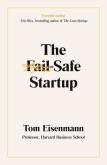
90% of all startups fail. But why?
For the past decade, this is a question that Tom Eisenmann has tried to answer. Focusing his research and his MBA class at Harvard University on the mistakes and missteps of entrepreneurs, for the first time, he reveals his findings, and - most importantly - how you can avoid them.
Eisenmann's fascinating, often counter-intuitive, advice debunks common Silicon Valley mythology including:
The False Promise: How early success, often based on extenuating factors, gives founders the misplaced confidence to expand.
The False Start: That the 'fail fast' mentality of many founders can mean launching before they're ready - wasting time and money.
The Audacity of Goals: Silicon Valley scoffs at moderate ambitions but the more audacious your goals, the more can go wrong.
Drawing on case studies from startups around the world, in all shapes and sizes, The Fail-Safe Startup will show you how to analyse others' failure to ensure your success.
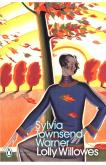
Lolly Willowes, so gentle and accommodating, has depths no one suspects. When she suddenly announces that she is leaving London and moving, alone, to the depths of the countryside, her overbearing relatives are horrified. But Lolly has a greater, far darker calling than family: witchcraft.
'The book I'll be pressing into people's hands forever . . . It tells the story of a woman who rejects the life that society has fixed for her in favour of freedom ... tips suddenly into extraordinary, lucid wildness' Helen McDonald
'Witty, eerie, tender ... her prose, in its simple, abrupt evocations, has something preternatural about it' John Updike
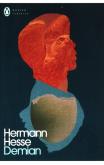
Demian is a coming-of-age story that follows a young boy's maturation as he grapples with good and evil, lightness and darkness, and forges alternatives to the ever-present corruption and suffering that he sees all around him. Crucial to this development are his relationships with a series of older mentors, of who the titular Demian is the most charismatic, otherworldly and ultimately influential.
Many have noted the influence of Jungian psychology upon this novel and it is fascinating to see Herman Hesse's interests in the self, existence and free will play out through through the lens of early twentieth-century Europe; Christian imagery and themes are ever-present, as is the shadow of the First World War.
The bestselling American classic of youthful rebellion and coming of age on the streets, adapted into an award-winning film by Francis Ford Coppola
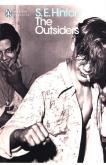
The Greasers and the rich-kid Socs are at war on the Tulsa streets. Ponyboy, a fourteen-year-old brawler, chainsmoker and dreamer, is a fiercely loyal greaser. But a single, murderous catastrophe is to wrench him from his old life and overturn everything he thinks he knows. The Outsiders was an audacious debut written when S. E. Hinton was only seventeen, laying bare the hopes and terrors between teenage bravado in a world of drive-ins, drag races and switchblades. Confronting America with a new breed of anti-hero from the wrong side of the class divide, The Outsiders is a young adult novel of enduring power. It was made into a film in 1983 starring Patrick Swayze, Rob Lowe and Tom Cruise.
With an introduction by Jodi Picoult
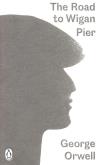
A searing account of George Orwell's observations of working-class life in the bleak industrial heartlands of Yorkshire and Lancashire in the 1930s, The Road to Wigan Pier is a brilliant and bitter polemic that has lost none of its political impact over time. His graphically unforgettable descriptions of social injustice, cramped slum housing, dangerous mining conditions, squalor, hunger and growing unemployment are written with unblinking honesty, fury and great humanity. It crystallized the ideas that would be found in Orwell's later works and novels, and remains a powerful portrait of poverty, injustice and class divisions in Britain.
Published with an introduction by Richard Hoggart in Penguin Modern Classics.
'It is easy to see why the book created and still creates so sharp an impact ... exceptional immediacy, freshness and vigour, opinionated and bold ... Above all, it is a study of poverty and, behind that, of the strength of class-divisions'
Richard Hoggart
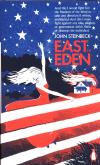
'There is only one book to a man' Steinbeck wrote of East of Eden. Set in the rich farmland of the Salinas Valley, California, this powerful, often brutal novel, follows the interwined destinies of two families - the Trasks and the Hamiltons - whose generations hopelessly re-enact the fall of Adam and Eve and the poisonous rivalry of Cain and Abel. Here Steinbeck created some of his most memorable characters and explored his most enduring themes: the mystery of indentity; the inexplicability of love, and the murderous consequences of love's absence.
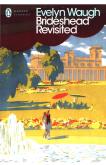
Brideshead Revisited is Evelyn Waugh's stunning novel of duty and desire set amongst the decadent, faded glory of the English aristocracy in the run-up to the Second World War.
The most nostalgic and reflective of Evelyn Waugh's novels, Brideshead Revisited looks back to the golden age before the Second World War. It tells the story of Charles Ryder's infatuation with the Marchmains and the rapidly disappearing world of privilege they inhabit. Enchanted first by Sebastian Flyte at Oxford, then by his doomed Catholic family, in particular his remote sister, Julia, Charles comes finally to recognise his spiritual and social distance from them.
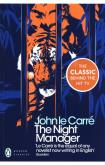
In The Night Manager, an ex-soldier helps British Intelligence penetrate the secret world of ruthless arms dealers.
At the start of it all, Jonathan Pine is merely the night manager at a luxury hotel. But when a single attempt to pass on information to the British authorities - about an international businessman at the hotel with suspicious dealings - backfires terribly, and people close to Pine begin to die, he commits himself to a battle against powerful forces he cannot begin to imagine.
In a chilling tale of corrupt intelligence agencies, billion-dollar price tags and the truth of the brutal arms trade, John le Carré creates a claustrophobic world in which no one can be trusted.
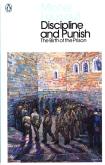
The grisly spectacle of public executions and torture of centuries ago has been replaced by the penal system in western society - but has anything really changed?
In his revolutionary work on control and power relations in our public institutions, Michel Foucault argues that the development of prisons, police organizations and legal hierarchies has merely changed the focus of domination from our bodies to our souls. Even schools, factories, barracks and hospitals, in which an individual's time is controlled hour by hour, are part of a disciplinary society.
'Foucault's genius is called forth into the eloquent clarity of his passions ... his best book' Washington Post
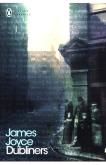
James Joyce's Dubliners is an enthralling collection of modernist short stories which create a vivid picture of the day-to-day experience of Dublin life. This Penguin Classics edition includes notes and an introduction by Terence Brown.
Joyce's first major work, written when he was only twenty-five, brought his city to the world for the first time. His stories are rooted in the rich detail of Dublin life, portraying ordinary, often defeated lives with unflinching realism. From 'The Sisters', a vivid portrait of childhood faith and guilt, to 'Araby', a timeless evocation of the inexplicable yearnings of adolescence, to 'The Dead', in which Gabriel Conroy is gradually brought to a painful epiphany regarding the nature of his existence, Joyce draws a realistic and memorable cast of Dubliners together in an powerful exploration of overarching themes. Writing of social decline, sexual desire and exploitation, corruption and personal failure, he creates a brilliantly compelling, unique vision of the world and of human experience.
'One of the most moving, revolutionary artworks of the twentieth century' Michael Cunningham
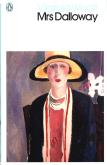
Clarissa Dalloway, elegant and vivacious, is preparing for a party and remembering those she once loved. In another part of London, Septimus Warren Smith is suffering from shell-shock and on the brink of madness. Smith's day interweaves with that of Clarissa and her friends, their lives converging as the party reaches its glittering climax. Virginia Woolf's masterly novel, in which she perfected the interior monologue, brings past, present and future together on one momentous day in June 1923.
Clear, bright, burnished ... the moods that it expresses are a true kind of poetry' The New York Times
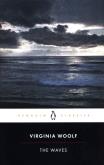
Tracing the lives of a group of friends, The Waves follows their development from childhood to middle age. While social events, individual achievements and disappointments form its narrative, the novel is most remarkable for the rich poetic language that expresses the inner life of its characters: their aspirations, their triumphs and regrets, their awareness of unity and isolation, and their questioning of the meaning of life itself. Perhaps more than any of Woolf's novels, The Waves conveys the endless complexities of human experience.
Edited with an Introduction and Notes by Kate Flint
'This century's most compelling theorist of racism and colonialism' Angela Davis
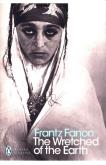
Written at the height of the Algerian war for independence from French colonial rule and first published in 1961, Frantz Fanon's Wretched of the Earth has provided inspiration for anti-colonial movements ever since, analysing the role of class, race, national culture and violence in the struggle for freedom. With power and anger, Fanon makes clear the economic and psychological degradation inflicted by imperialism. It was Fanon, himself a psychotherapist, who exposed the connection between colonial war and mental disease, who showed how the fight for freedom must be combined with building a national culture, and who showed the way ahead, through revolutionary violence, to socialism.
'In clear language, in words that can only have been written in the cool heat of rage, he showed us the internal theatre of racism' Deborah Levy
'One of the greatest elegies in the English language, a book which transcends time' Margaret Drabble
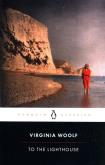
To the Lighthouse is at once a vivid impressionistic depiction of a family, the Ramseys, whose annual summer holiday in Scotland falls under the shadow of war, and a meditation on marriage, on parenthood and childhood, on grief, tyranny and bitterness. The novel's use of stream of consciousness, reminiscence and shifting perspectives gives it an intimate, poetic essence, and at the time of publication in 1927 it represented an utter rejection of all that had gone before.
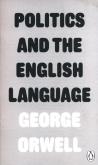
'Politics and the English Language' is widely considered Orwell's most important essay on style. Style, for Orwell, was never simply a question of aesthetics; it was always inextricably linked to politics and to truth.'All issues are political issues, and politics itself is a mass of lies, evasions, folly, hatred and schizophrenia.When the general atmosphere is bad, language must suffer.'Language is a political issue, and slovenly use of language and cliches make it easier for those in power to deliberately use misleading language to hide unpleasant political facts. Bad English, he believed, was a vehicle for oppressive ideology, and it is no accident that 'Politics and the English Language' was written after the close of World War II.
'This century's most compelling theorist of racism and colonialism' Angela Davis
'Fanon is our contemporary ... In clear language, in words that can only have been written in the cool heat of rage, Fanon showed us the internal theatre of racism' Deborah Levy
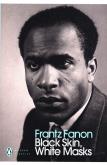
Frantz Fanon's urgent, dynamic critique of the effects of racism on the psyche is a landmark study of the black experience in a white world. Drawing on his own life and his work as a psychoanalyst to explore how colonialism's subjects internalize its prejudices, eventually emulating the 'white masks' of their oppressors, it established Fanon as a revolutionary anti-colonialist thinker.
'So hard to put down ... a brilliant, vivid and hurt mind, walking the thin line that separates effective outrage from despair' The New York Times Book Review
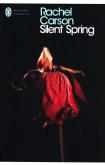
Rachel Carson's Silent Spring alerted a large audience to the environmental and human dangers of indiscriminate use of pesticides, spurring revolutionary changes in the laws affecting our air, land, and water. This Penguin Modern Classics edition includes an introduction by Lord Shackleton, a preface by World Wildlife Fund founder Julian Huxley, and an afterword by Carson's biographer Linda Lear.
Now recognized as one of the most influential books of the twentieth century, Silent Spring exposed the destruction of wildlife through the widespread use of pesticides. Despite condemnation in the press and heavy-handed attempts by the chemical industry to ban the book, Rachel Carson succeeded in creating a new public awareness of the environment which led to changes in government and inspired the ecological movement. It is thanks to this book, and the help of many environmentalists, that harmful pesticides such as DDT were banned from use in the US and countries around the world.
Rachel Carson (1907-64) wanted to be a writer for as long as she could remember. Her first book, Under the Sea Wind, appeared in 1941. Silent Spring, which alerted the world to the dangers of the misuse of pesticides, was published in 1962. Carson's articles on natural history appeared in the Atlantic Monthly, the New Yorker, Reader's Digest and Holiday. An ardent ecologist and preservationist, Carson warned against the dumping of atomic waste at sea and predicted global warming.
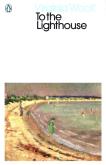
To the Lighthouse is at once a vivid impressionistic depiction of a family, the Ramseys, whose annual summer holiday in Scotland falls under the shadow of war, and a meditation on marriage, on parenthood and childhood, on grief, tyranny and bitterness. The novel's use of stream of consciousness, reminiscence and shifting perspectives gives it an intimate, poetic essence, and at the time of publication in 1927 it represented an utter rejection of all that had gone before.
Ten produkt jest zapowiedzią. Realizacja Twojego zamówienia ulegnie przez to wydłużeniu do czasu premiery tej pozycji. Czy chcesz dodać ten produkt do koszyka?