W tym dziale znajdziecie fascynująca literaturę, która przekona was jak fascynująca i ciekawa jest historia i jak wiele możemy się nauczyć. Może zainteresujecie się wojną na Pacyfiku, o której ciekawie pisze Morison Samuel Eliot, albo może zaciekawią was powieści Adama Borowieckiego, które przedstawiają przygody w galaktykach kosmosu Junga i Ing. Zapraszamy równiez po powieści biograficzne, polityczne.
Adrian Carton de Wiart's autobiography is one of the most remarkable of military memoirs. He was the son of a Belgian barrister, Leon Constant Ghislain Carton de Wiart (1854-1915). He, himself, was intended for the law, but abandoned his studies at Balliol College, Oxford, in 1899 to serve as a trooper in the South African War.
He abandoned the law for all time on 14 September 1901 when he received a direct commission in the 4th Dragoon Guards. Carton de Wiart's extraordinary military career embraced service with the Somaliland Camel Corps (1914-15), liaison officer with Polish forces (1939), membership of the British Military Mission to Yugoslavia (1941), a period as a prisoner of war (1941-43), and three years as Churchill's representative to Chiang Kai-shek (1943-46). (Churchill was a great admirer.)
During the Great War, besides commanding the 8th Glosters, Carton de Wiart was GOC 12 Brigade (1917) and GOC 105 Brigade (April 1918). Both these command were terminated by wounds. He was wounded eight times during the war (including the loss of an eye and a hand), won the VC during the Battle of the Somme, was mentioned in despatches six times, and was the model for Brigadier Ben Ritchie Hook in the Sword of Honour trilogy of Evelyn Waugh.
1000 lat temu, prawdopodobnie w Wielkanoc 18 kwietnia 1025 roku w Gnieźnie lub w Poznaniu, Bolesław Chrobry założył na skronie koronę królewską. Ten niezwykle energiczny, ambitny, srogi wobec wrogów zewnętrznych i wewnętrznych, a zarazem bardzo inteligentny władca wyniósł państwo piastowskie do rangi królestwa. Wprawdzie wkrótce zmarł, ale sięgniecie po koronę miało duże znaczenie prestiżowe dla dynastii Piastów i trwale zapisało się w polskiej tradycji narodowej. Robert F. Barkowski, pisarz tworzący powieści historyczne oraz popularyzator specjalizujący się w dziejach średniowiecza, stworzył popularną biografię pierwszego króla Polski. Dowiemy się z niej: - jak Bolesław sięgnął po władzę, pozbywając się konkurentów z drugiego małżeństwa ojca, Mieszka I; - jak sprzymierzył się z najpotężniejszym człowiekiem ówczesnej Europy, cesarzem Otonem III; - jak dzielnie i z powodzeniem walczył z jego następcą Henrykiem II oraz innymi sąsiadami, m.in. zdobywając w 1018 roku ruski Kijów ? według legendy to tam wyszczerbił swój miecz (nazwany potem Szczerbcem) o Złotą Bramę. Poznamy go też jako polityka rządzącego państwem twardą ręką, budującego grody i kościoły, bijącego monety oraz od strony prywatnej ? nie wszyscy wiedzą, że miał aż cztery żony i zapewne niejedną nałożnicę…
An illustrated study of Rome's key enemies from the Late Principate and Dominate: the western Visigoths and the eastern Ostrogoths.
The Goths were a Germanic people who, under pressure from the Huns, migrated during the 2nd century AD to the Balkans, where they split into the Visigoths to the west, and the Ostrogoths to the east. After first raiding and looting Roman territory, some eventually came to serve as allies to the Empire, but this allegiance would collapse following a Hun advancement that saw the Goths forced south against the Danube. Failure to negotiate settlement in this new, Roman-held territory led to wars, during which the Ostrogoths won a decisive victory over a Roman army at Adrianople (AD 378), and the Visigoths finally sacked Rome itself (AD 410).
In this fascinating study, Roman military historians Raffaele D'Amato and Andrea Salimbetiand Andrea Salimbeti examine Rome's fierce clashes with the Gothic peoples, exploring their role in the fall of the Western Empire and eventual transition from Roman to early medieval Europe. Newly commissioned artwork, artefact photos and expert research combine to bring to life key events in the Goths' history, including the Ostrogoths' defeat by Emperor Justinian in the 6th century, the establishment of Gothic kingdoms in Italy and the Iberian Peninsula, and their service as subjects and soldiers in Byzantine Crimea.
A gripping account of the most famous convoy operation of the war, which marked a high-water mark for the German naval campaign in the Arctic.
The Arctic was a vital conduit for transporting supplies directly from Great Britain to Russia. The British Home Fleet was tasked with protecting these convoys, which passed within range of the German bases in Norway. By 1942, the Germans had reinforced their air and naval forces, stationing a powerful naval surface group there centred around the battleship Tirpitz.
Convoy PQ-17 was set to be the last convoy to sail until the autumn of 1942, and was a particularly large one, involving 35 merchant ships, over half of which were American. When it departed Reykjavik on 27 June, bound for Archangel, the Germans were ready and waiting. The convoy was the first large joint Anglo-American naval operation under British command.
Here, expert naval historian Angus Konstam documents the withdrawal of the Allied close escort to intercept the German raiders, and the devastating attacks on the scattered merchant ships by German aircraft and U-boats. Maps and diagrams plot the passage and fate of the convoy elements, and stunning artworks bring to life key moments of their efforts to escape. In the end, 24 Allied ships were sunk, and only ten merchant ships and four auxiliaries reached the port of Archangel. PQ-17 would prove to be the worst convoy loss of World War II, and the most controversial.
In one of the great English war memoirs, we learn what it is to cross the Pyrenees through freezing snow to fight fascism in Spain; to narrowly escape execution by your own side; to kill a man with a borrowed rifle and feel nothing but shame. Moving and shrapnel-sharp, A Moment of War recalls the defeat of idealism; ‘that flush of youth which never doubts self-survival, that idiot belief in luck’.
Arrested in Cologne for remarking that the Fuhrer looked sweaty, nineteen-year-old Sanna has fled to Frankfurt. But her troubles are far from over. Her best friend Gerti has fallen for a Jewish boy, her brother writes books that have been blacklisted, and her own aunt could turn her in to the authorities at any moment. Darkly humorous and utterly heart rending, this gripping novel vividly captures the terror and hysteria of pre-war Nazi Germany.
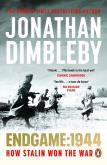
June 1944: In Operation Bagration, more than two million Red Army soldiers, facing 500,000 German soldiers, finally avenged their defeat in Operation Barbarossa in 1941. The same month saw the Allies triumph on the beaches of Normandy, but, despite the myths that remain, it was the events on the Eastern Front that sealed Hitler's fate and destroyed Nazism.
In his new book, bestselling historian Jonathan Dimbleby describes and analyses this momentous year, covering the military, political and diplomatic story in his evocative style. Drawing on previously untranslated German, Russian and Polish sources, we see how sophisticated new forms of deception and ruthless Partisan warfare shifted the Soviets’ fortunes, how their triumphs effectively gave Stalin authority to occupy Eastern Europe and how it was the events of 1944 that enabled Stalin to dictate the terms of the post-war settlement, laying the foundations for the Cold War . . .
The first political history of the Second World War, of building the Grand Alliance to defeat Hitler, by the Sunday Times-bestselling author of Appeasing Hitler
A landmark history of the alliance that won the war and made the peace by the Sunday Times-bestselling author of Appeasing Hitler
‘An astonishing achievement. Compellingly told, immensely wide-ranging and utterly fascinating … Superb’ JAMES HOLLAND
After the fall of France in June 1940, only Britain stood between Hitler and total victory. Desperate for allies, Winston Churchill did everything he could to bring the United States into the conflict, drive the Soviet Union and Nazi Germany apart and persuade neutral countries to resist German domination.
By 1942, after the German invasion of Russia and the Japanese attack on Pearl Harbor, the British-Soviet-American alliance was in place. Yet it was an improbable and incongruous coalition, divided by ideology and politics and riven with mistrust and deceit. Churchill, Roosevelt and Stalin were partners in the fight to defeat Hitler, yet they were also rivals who disagreed on strategy, imperialism and the future of liberated Europe.
Allies at War is a fast-paced, narrative history, based on material drawn from over a hundred archives. Using vivid, first-hand accounts and unpublished diaries, we enter the rooms where the critical decisions were made, revealing the political drama behind the military events. Ambitious and compelling, Allies at War offers a fresh perspective on the Second World War and the origins of the Cold War.
During World War II, Allied bombing obliterated every major German and Japanese city. Before the dropping of the atomic bombs, conventional bombing had killed approximately 400,000 Germans and 330,00 Japanese, the vast majority civilians.
Two-thirds of Germans who died under the bombs did so in 1944 and 1945, and in the last year of the war cities with little military were obliterated. In Japan, American bombers destroyed all but three major Japanese cities, and the people in them, after March 1945. These raids occurred, in other words, when Allied victory was assured and when precision bombing techniques were far more advanced than they were earlier in the war.
Fire and Fury asks why.
Based on extensive archival sources, interviews with bombing survivors, airmen, and published first-hand accounts, the book looks at the bombing campaign from an avowedly human perspective – Allied, German and Japanese. It recreates the experience of living through the death of a city. It presents the complex personalities of the senior airmen, and explores why bombing campaigns that seem so excessive seventy-five years later seemed reasonable, to many, at the time. It explains why those campaigns became so murderous so late in the war. And it asks, with the full benefits of time’s fullness, whether it was all worth it.
The History War is a book of photographs, collages and ephemera which begins with a timeline tracing Ukraine’s evolution from the 5th century and its long struggle for independence. The book is divided into six narratives documenting the events and people Larry Towell encountered in his many journeys to Ukraine.
Please note that the book comes in two colourways—a yellow cover with blue endpapers and a blue cover with yellow endpapers. A colour will be allocated to customers at random.
A visceral account of the white-knuckled bombing mission carried out on Hitler’s hometown.
In April 1945, Linz was one of Nazi Germany’s most vital assets: a crucial transportation hub and communications centre, its railyards brimming with war materiel destined for the front lines. Linz was also the town Hitler claimed as home. Inevitably, it was one of the most heavily defended targets remaining in Europe.
In their unheated, unpressurized B‑24 Liberator and B‑17 Flying Fortress heavy bombers, the young men of the US Fifteenth Air Force battled elements as dangerous as anything the Germans could throw at them. When batteries of German anti‑aircraft guns did open fire, the men flew into a man‑made hell of exploding shrapnel.
Drawing on interviews with dozens of surviving World War II veterans and residents of Linz, as well as previously unpublished sources, Mike Croissant compellingly relates one of the war’s last truly untold stories – a gripping chronicle of warfare and a timeless tale of courage and terror, loss and redemption.
With a foreword by Richard Overy, author of The Bombers and the Bombed
Ferrara, Italy. 1940. Lili Passigli is studying at the University of Ferrara when Mussolini’s Racial Laws deem her of ‘inferior’ Jewish descent, blindsiding her completely. As Hitler’s strength grows across Europe, Lili’s world begins to shrink around her, with the papers awash in Fascist propaganda and the city walls desecrated with anti-semitic slurs. When Germany invades northern Italy, Lili and her best friend Esti find themselves on their own in Nazi-occupied territory.
With the help of the Resistance, Lili and Esti flee with Esti’s two-year-old son Theo, in tow, facing a harrowing journey south toward the Allies and freedom. On this trek through war-torn Italy, they will face untold challenges and devastating decisions.
All That Is explores a life unfolding in a world on the brink of change. The life is that of Philip Bowman and we see his formative experiences as a young naval officer in battles off Okinawa, his post-war career as a book editor in New York, his trips to the great European cities - for publishing parties in London, romantic holidays in Paris.
But despite his success, what eludes him is love. His first marriage goes bad, another fails to happen, finally he meets a woman who enthrals him before setting him on a course he could never imagine for himself.
James Salter's dazzling, seductive and haunting novel offers a fiercely intimate account of the great shocks and grand pleasures of being alive.
An extraordinary, heartwarming story about one brave cat's experiences during World War II from prize-winning author Robert Westall. Now with a brilliant new cover look.
Winner of the 1989 Smarties Prize
She made her way down the cliff, and on to the beach. At the edge of the waves, she stopped, shaking her wet paws. She knew that somewhere ahead was her person, but far, far away. She miaowed plaintively; stood staring at the moving blur of uncrossable sea.
She led the way to safety, out of the blazing hell of blitzed Coventry. People touched her for luck; feared her as an omen of disaster. Wherever she went, she changed lives . . .
From her beginning to her end she never wavered.
She was the Blitzcat.
W latach 2004-2018 Toruńskie Spotkania Dydaktyczne stały się forum wymiany poglądów między dydaktykami, doradcami metodycznymi i nauczycielami historii. Konferencje organizowane co dwa lata przez Polskie Towarzystwo Historyczne, Stowarzyszenie Oświatowców Polskich oraz Instytut Historii i Archiwistyki UMK gościły dydaktyków historii z wielu polskich uczelni, a także specjalistów z Wielkiej Brytanii, Stanów Zjednoczonych, Francji, Szwecji, Ukrainy, Litwy i Łotwy. Rezultaty tych dyskusji znalazły się w 12 tomach, które odzwierciedlają zainteresowania badawcze i problemy kształcenia historycznego.
Prezentowany tom "I Forum Edukacji Historycznej: nowe wyzwania" to owoc dyskusji dydaktyków historii, jaka odbyła się w Toruniu w 2023 roku. Nowa inicjatywa, nawiązująca do tradycji Toruńskich Spotkań Dydaktycznych i ich integrującego charakteru, jest jednocześnie próbą rozszerzenia dawnej formuły i wzbogacenia jej o głosy na temat współczesnych wyzwań edukacyjnych. Ten nowy początek jest wynikiem dobrej współpracy Polskiego Towarzystwa Historycznego, Katedry Metodologii, Dydaktyki i Historii Kultury UMK oraz Komisji Dydaktyki Historii Komitetu Nauk Historycznych PAN, a zarazem zapowiedzią kolejnych spotkań dydaktyków, nauczycieli, spotkań teorii z praktyką edukacyjną.
Książka prezentuje 17 artykułów ukazujących współczesną sytuację edukacji historycznej na tle przemian, jakie przyniosły kolejne reformy R po 1989 roku. Odnajdziemy tu zarówno próby postawienia diagnozy stanu edukacji, analizę podstawy programowej i podręczników do nauczania historii, jak i pytania o miejsce historii w przestrzeni publicznej, w polityce, w muzeach, archiwach, w świecie cyfrowym. Czytelnik odnajdzie tu refleksje wpisujące się w szeroką dyskusję nad stanem polskiej szkoły, a w szczególności nad wyzwaniami stojącymi przed edukacją historyczną.
W okresie II wojny światowej, gdy Rumunia znajdowała się w sojuszu z III Rzeszą rafinerie w Ploeszti zaopatrywały w paliwo wojska niemieckie. Z tego względu już w 1943 roku rozpoczęły się alianckie naloty, mające na celu zniszczenie instalacji i urządzeń służących do produkcji materiałów pędnych. Spowodowały one duże zniszczenia, ale okupione zostały przez aliantów sporymi stratami w ludziach i samolotach, gdyż był to trzeci pod względem priorytetu obrony przeciwlotniczej teren broniony przez Niemców
Autor opisuje wojenne dzieje 307 Dywizjonu Myśliwskiego Lwowskich Puchaczy. Jego wkład do ogólnego bilansu osiągnięć bojowych Polskich Sił Powietrznych na obczyźnie jest znaczny, obejmuje samoloty wroga zestrzelone i uszkodzone w powietrzu, zniszczone na ziemi pociski balistyczne V-1 i V-2, lokomotywy, pociągi, pojazdy mechaniczne i wiele innych obiektów stacjonarnych (urządzeń lotniskowych, radiolokacyjnych, stanowisk artylerii przeciwlotniczej i przemysłowych). Bojowe zasługi trzysta siódmego przeszły do historii i są jeszcze jedną kartą zbrojnego wysiłku Polaków na wszystkich frontach koalicji antyhitlerowskiej.
Historia działalności niemieckiego krążownika ciężkiego Admiral Graf Spee typu Deutschland, tzw. pancernika kieszonkowego. 21 sierpnia 1939 roku wypłynął on na południowy Atlantyk, a pod koniec września tego roku otrzymał rozkaz, aby atakować każdy aliancki statek handlowy. Od 30 września do 7 grudnia 1939 roku zatopił dziewięć brytyjskich statków handlowych. W dniu 13 grudnia 1939 r. został wykryty u ujścia rzeki La Plata przez okręty alianckie. Stoczył tam krótką bitwę z siłami alianckim, a następnie został przez nie zablokowany w porcie. W wyniku tego został samozatopiony przez załogę 17 grudnia 1939 roku.
Dramatyczny opis zamachu na życie Adolfa Hitlera, którego dokonał Claus von Stauffenberg. Podłożył on bombę w sali narad w kwaterze Wilczy Szaniec koło Kętrzyna w Prusach Wschodnich. Po umieszczeniu ładunku von Stauffenberg samolotem wrócił samolotem do Berlina, aby zrealizować plan przejęcia władzy po śmierci Fhrera znany jako operacja "Walkiria". Ze względu na nieprzewidziane przez spiskowców okoliczności Hitler przeżył wybuch i spiskowcom nie udało się wzniecić ogólnoniemieckiego powstania. Ich dalsze losy były tragiczne.
Ten produkt jest zapowiedzią. Realizacja Twojego zamówienia ulegnie przez to wydłużeniu do czasu premiery tej pozycji. Czy chcesz dodać ten produkt do koszyka?