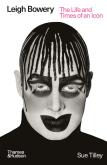
From his arrival in London in 1980, clutching a suitcase and sewing machine, to his death from AIDS in 1994, artist, performer, musician, club promoter and fashion designer Leigh Bowery led an extraordinary life.
Chronicled here with candid wit and affection, Leigh’s closest confidante Sue Tilley describes her best friend’s journey as a creative young gay kid growing up in the Melbourne suburbs who burst onto the vibrant London club scene of the 1980s and changed it forever. Brilliantly evoking the hedonistic energy of the city, Tilley’s personal account of her life with Leigh – their best mates, holidays, clubbing, drugs, outfits, flatmates and sex lives – paints a vivid picture of 80s pop culture through their friendship and love of a good time. She also offers irreverent anecdotes of the London art world, and particularly of Leigh’s close relationship with Lucian Freud, who painted Leigh many times from 1990 onwards; and concludes with a poignant and unsentimental recollection of Leigh’s final days in hospital.
Written with the full co-operation of his family and friends, including Charles Atlas, Rachel Auburn, Michael Clark, Lucian Freud, Jeffrey Hinton, Damien Hirst, Princess Julia, Cerith Wyn Evans and Baillie Walsh.
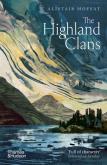
The story of the Highland clans is a gripping one, full of celebrated names and heroic deeds. It is also, as Alistair Moffat reveals, the story of a fearless people, shaped by the unique traditions and landscape of the Scottish Highlands.
Here, he traces the history of the clans from their Celtic origins to the coming of the Romans, through the great battles of Bannockburn and Flodden, to the Clearances and the present day. The story of the clans is also about the pain of leaving, with the great emigrations to the United States, Canada, Australia and New Zealand. Clansmen and women disappeared, but the memories have never faded. Even today the power of the ancient clan names persists, drawing many back to this rugged corner of the world. Complete with a clan map and an alphabetical list of the clans of the Scottish Highlands, this is a must for anyone interested in the history of Scotland.
‘Pithy, admirable ... a most refreshing resumé’ The Times Literary Supplement
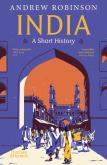
India has had many histories. To pilgrims from ancient China, India was the birthplace of the Buddha; to Alexander the Great it was a land of clever naked philosophers and indomitable, elephantine armies. At the height of the Mughal empire, India boasted nearly a quarter of the world economy, and even under colonial rule it was the jewel in the crown of the British Empire. Today it is the resurgent home to one sixth of the global population.
Andrew Robinson incisively distils India’s many incarnations, from the remarkably advanced cities of the early Indus Valley to the world’s largest democracy. Anyone curious about its past, present or future will find this a fascinating introduction.
‘Pithy, admirable ... a most refreshing resumé’ The Times Literary Supplement
India has had many histories. To pilgrims from ancient China, India was the birthplace of the Buddha; to Alexander the Great it was a land of clever naked philosophers and indomitable, elephantine armies. At the height of the Mughal empire, India boasted nearly a quarter of the world economy, and even under colonial rule it was the jewel in the crown of the British Empire. Today it is the resurgent home to one sixth of the global population.
Andrew Robinson incisively distils India’s many incarnations, from the remarkably advanced cities of the early Indus Valley to the world’s largest democracy. Anyone curious about its past, present or future will find this a fascinating introduction.
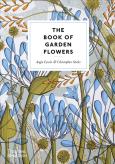
Christopher Stocks tells the fascinating tales of nineteen cultivated flowers and their journeys from distant corners of the world to British gardens, illustrated by the painter and printmaker Angie Lewin in this charming companion guide.
The Book of Garden Flowers builds on the success of Angie Lewin’s and Christopher Stocks’ previous collaborations; The Book of Wild Flowers (Thames & Hudson, 2024) and The Book of Pebbles (Thames & Hudson, 2020.) While The Book of Wild Flowers explored the natural history of Britain’s favourite wild species, The Book of Garden Flowers is more a social history, bringing into focus some of the remarkable people who introduced exotic plants to our gardens from around the globe, including:
• Margery Fish, secretary to six successive editors at the Daily Mail, who rescued many cottage garden flowers from obscurity
• Ellen Willmot, who employed over 100 staff in her garden and burned through a huge fortune thanks to her passion for plants, dying penniless and alone
• Charles Dickens, who became obsessed with a particular pelargonium
• John Gerrard, the famous 17th-century herbalist, who planted the first nasturtiums in the UK at his City of London garden
• Henry VIII, who ate the first British-grown artichokes on the outskirts of Chelmsford
Revealing new stories behind some of our most familiar and unusual garden plants, this beautiful book explores the horticultural history and floral folklore of some of the nation’s favourite flowers.
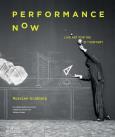
The definitive illustrated overview of contemporary performance art.
Performance Now charts the development of live art across six continents since the turn of the 21st century. It reveals how performance, so integral to the history of art in the 20th century, has become an increasingly essential vehicle for communicating ideas across the globe in the new millennium.
Renowned authority RoseLee Goldberg discusses key themes in performance art practice, from beauty, global citizenship and political activism to performance’s intersection with film and technology, dance, theatre and architecture. Each chapter is followed by illustrated profiles of the world’s best-known performance artists, accompanied by extended captions that assess the importance of specific works to the practice of international performance art.
A visually exciting and stimulating overview of this most varied art form, Performance Now is the go-to reference for artists, art students and historians as well as avant-garde theatre and movie goers.
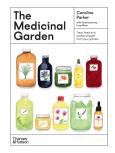
Medicinal herbs aren’t just for traditional medicinal preparations, they are also a wonderful way to compliment a healthy diet. The Medicinal Garden is a brilliant guide to revitalizing your health by soothing your mind, body and green thumb.
From edible treats to therapeutic remedies, unearth the healing potential of plants both wild and cultivated. Featuring forty herb profiles and seven medicinal weeds ideal for foraging, learn how to set up and maintain a planted or potted garden for a healthful life.
Discover the healing power of your very own medicinal garden with recipes for cakes, biscuits, jams, soups, teas and many more. The book features easy, natural remedies for your skin, gut, muscles, heart and mind with recipes for oils, tinctures, compresses, steams and washes for health and healing.
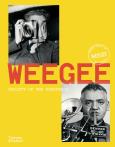
Weegee’s macabre tabloid photographs of murdered gangsters, bodies trapped in crashed cars, slums consumed by fire, and other poignant records of New York’s nocturnal low life in the 1930s and 40s are the stuff of legend. Lesser-known, however, is the work he created in his later years, when he satirized Hollywood, mocking its fleeting glory, jubilant crowds, and social scenes, and created celebrity portraits that he delighted in distorting using a palette of technical tricks. And herein lies the paradox of Weegee: how can two such wildly different bodies of work co-exist?
Offering the first evaluation of the famed photographer’s career in its entirety, this book reconciles the two sides of Weegee by showing how the ‘spectacle’ was the unifying theme of his work. Over 130 images, some iconic, some more rarely seen, are accompanied by essays that explore the consistent themes throughout Weegee’s career, his documentary and photojournalism work, and his last great series taken on the set of Stanley Kubrick’s 1964 film Dr. Strangelove.
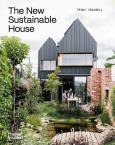
A showcase from across the globe of 25 houses offering creative solutions for planet-friendly home design.
Designing with the environment in mind is not 'new'. What is new is the increasing number of ways houses can be more sustainably built. With a fresh focus on design ingenuity, new technologies and materials, The New Sustainable House demonstrates that there is more to ecologically motivated construction than solar panels and water tanks.
From a mud-brick single-storey box built in the Texas desert to an all-timber Swedish cabin that is completely petrochemical-free, what unites this diverse collection of houses is the shared motivation of the architects and clients to do as little damage as possible to the planet, without compromising on comfort or aesthetics. This compelling survey shows that the environmental impact of every home, no matter the size or location, can be greatly reduced with creative and responsible design.
When we think of the trailblazing photographer Dennis Morris’s work, music is right there. Morris’s adventures in the 1970s reggae and punk scene laid the groundwork for a six-decade career.
It all began with Bob Marley: Morris doorstepped Marley in his early teens while skipping school and went on to capture much of Marley’s tour, which launched his career as a music photographer. He later became the official photographer for the Sex Pistols, and for John Lydon’s next project, Public Image Limited, Morris was art director and designer as well as taking iconic images for the band. He captured the greats of reggae and roots music, from Lee 'Scratch' Perry to Toots and Jimmy Cliff, forming friendships with many of the acts.
Morris's documentary and street photography work, with roots in his experiences as a Black teenager in 1970s Britain, bring us visionary projects that explore race, politics and cultural identity. From the miner's strike to squat protests, from civil rights organizations to pop-up studio portraits, his work was a reckoning with his new home, capturing eccentricity and individual spirits with his camera.
Edited by Laurie Hurwitz, this book unfolds in two electrifying parts: the first unravels Morris’s lens on race, culture and identity in 1970s Britain, while the second pulses with encounters with music legends like Patti Smith, Gregory Isaacs, The Stone Roses and Radiohead.
With contributions from agnès B and Sean O’Hagan, the book will delight photography fans and music lovers alike. It includes previously unseen images, and is supported by an internationally touring exhibition, presenting Morris’s influential work in depth for the first time.
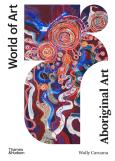
This concise survey showcases the incredible, diverse work of Aboriginal and Torres Strait artists. Building on traditions that stretch back at least 50,000 years, these artists have long worked in a variety of contexts from the sacred and secret realm of ceremony to more public spheres. From isolated beginnings to post-colonialism and the present, Wally Caruana explains how Aboriginal and Torres Strait Islander art has continually developed and responded to change; and considers the impact of urban living, the growth of local art centres that support the artists in these communities, and the recognition of women artists.
This new edition has been expanded and updated to include and reflect on important artists who have emerged in the last decade, with a focus on the burgeoning of activity in the Southern Desert region, Queensland and the Torres Strait Islands - all testament to Aboriginal art’s continued dynamism and vitality.
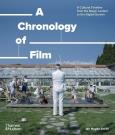
This visual timeline for film enthusiasts makes the history of cinema – from the earliest moving images to the latest blockbusters – newly accessible by organizing it chronologically.
• A large format makes it easy to trace the complex links between technological innovations, social changes and artistic interventions.
• An easy-to-read timeline identifies key films, together with commentaries and contextual information about the social, political and cultural events of the period in which they were produced.
• In-depth essays explore a variety of film genres and styles, break down the technical advancements of the last 150 years, and highlight pivotal figures who have shaped the development of filmmaking.
With A Chronology of Film, cinema is an open book…
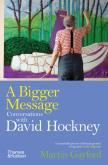
David Hockney’s exuberant work is highly praised and widely loved, but he is also something else: an incisive and original thinker on art. In this now classic book, filled with anecdote, insight, passion and wit, Hockney reveals the fruits of his lifelong meditations on the problems and paradoxes of representing a three-dimensional world on a flat surface.
Compiled from a decade and a half of conversations with art critic Martin Gayford, it reflects a period in which Hockney relocated from Los Angeles to his native East Yorkshire. Their exchanges communicate the immense delight and inspiration that Hockney finds in the changing seasons and natural splendours of this sparsely inhabited corner of England – a delight that is, in the words of Margaret Drabble, ‘an invitation to us all to look better, see better, enjoy more’.
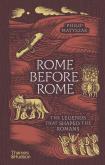
‘I sing of arms and the man’ wrote Virgil at the start of the Aeneid, one of Rome’s most iconic origin stories exploring the tumultuous journey of Aeneas from Trojan prince to a hero of Rome. But did Aeneas actually flee from Troy? How did this story affect the Roman’s perspective of themselves? And did they believe it? In Rome Before Rome, Philip Matyszak explores the myths and legends, heroes and villains that shaped the Roman sense of self.
There are few books which explain how these different legends fit into Rome’s overall narrative and none which explore the range of myths Matyszak describes. Some of the legends are well known, from Romulus and Remus to the Rape of the Sabines, whilst others are more obscure such as the story of the praetor Cipus, who grew horns and became a King of Rome. Whether renowned or unfamiliar, all are significant in their own way and have had a profound impact on the Romans. Even today these myths continue to reverberate throughout western culture as films, TV shows and plays.
Matyszak dissects these myths, investigating hard-to-find texts, such as the historical texts of Dionysius of Halicarnassus and Plutarch’s Roman Questions sources, as well as classic texts like Livy’s From the Founding of the City and Ovid’s Metamorphoses, revealing that Rome’s illustrious mythological past is not quite as it might seem.
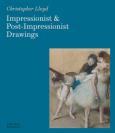
Manet, Pissarro, Morisot, Cézanne, Seurat, Gauguin, Van Gogh and their colleagues made some of the most beautiful drawings in the history of art. This book sets drawings by the Impressionists and Post-Impressionists in the context of late 19th-century France and explains why these particular works are as important as their paintings in the representation of modernity.
A new approach to materials and a wholly inclusive attitude to exhibitions gave drawings a more elevated status in this period than ever before, which avant-garde artists welcomed in their preference for scenes from contemporary life. For the first time also, painting and drawing shared the same stylistic principles of spontaneity, freer handling and lack of finish. Pastels by Degas, watercolours by Cézanne, pen-and-ink drawings by Van Gogh and mixed media works by Toulouse-Lautrec have an autonomy of their own, which proved instrumental in the development of modern art.
The distinguished art historian Christopher Lloyd examines the drawings of twenty of the leading Impressionist and Post-Impressionist artists, highlighting an aspect of French avant-garde art that remains relatively unexplored and was of immense importance for the art movements that followed.
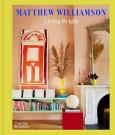
"The most joyful, inspirational interiors, with a fascinating personal story from the master of colour himself! Matthew shows us how to live life bright!" - Sienna Miller, actress
A practical guide and personal invitation from the king of colour to find your own style and embrace the paint pot whether designing a castle or a cupboard.
Think beige, grey and white are the only neutrals? Think again. As a lifelong fan of rich jewel tones, fashion designer turned interiors expert Matthew Williamson makes the case for living cocooned in colour. Pink can be subtle, warming and very liveable, while used sparingly fiery red can get you going. Let Matthew help you find your style DNA and you’ll soon be getting out the paint brush and turning bland corners of your home into a technicolour paradise.
Packed with inspirational images of interior decorating projects, including his own homes in London and Mallorca, as well as visual references that will transport you to the places that are close to his heart, Living Bright is the hardworking handbook to take on your journey to colourful living. No space is too small and no project too big. Just follow his simple instructions, work out which shades speak to you and a lifetime of kaleidoscopic colour awaits. Now is the time to banish boring and learn to live bright with joyful interiors that will lift your mood without punishing your bank balance. Whether serene, soft pink, or lively mustard yellow, earthy olive green or rich, regal purple, there’s a shade that will work for everyone and every home.
The design revolutions of the early 20th century were woven into the very fabric of the carpets and rugs of that era. Carpets of the Art Deco Era, previously published as Art Deco and Modernist Carpets and now reissued in PLC, is the first in-depth history on the subject. It charts the evolution of carpet design out of the floral effusions of the Victorian salons and into the angular elegance of Art Deco and bold abstraction of Modernism popularized by the machine age. Such artists and designers as Picasso, Poiret, Gray, Delaunay, Matisse, Klee, and many more advanced the designs going on underfoot, making these rugs extremely collectible artworks in their own right. Generously sized and beautifully illustrated with over 250 colour photographs, here are Art Deco carpets at their most glorious.
Since 1914 Marcel Duchamp has been called all of these. No artist of the twentieth century has aroused more passion and controversy, nor exerted a greater influence on art--the very essence of which Duchamp challenged and redefined as concept rather than product by questioning its traditionally privileged optical nature. At the same time, he never ceased to be engaged, openly or secretly, in provocative and enigmatic activities and works that transformed traditional art-making procedures. This definitive monograph, written with the enthusiastic support of Duchamp's widow, challenges received ideas, misunderstandings, and misinformation
Ten produkt jest zapowiedzią. Realizacja Twojego zamówienia ulegnie przez to wydłużeniu do czasu premiery tej pozycji. Czy chcesz dodać ten produkt do koszyka?