The art of astrology, from ancient science to modern-day practice
From the beginning of human history, individuals across cultures and belief systems have looked to the sky for meaning. The movement of celestial bodies and their relation to our human lives has been the central tenant of astrology for thousands of years. The practice has both inspired reverence and worship, and deepened our understanding of ourselves and the world around us.
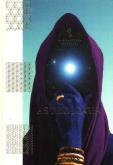
While modern-day horoscopes may be the most familiar form of astrological knowledge, their lineage reaches back to ancient Mesopotamia. As author Andrea Richards recounts in Astrology, the second volume in TASCHEN’s Library of Esoterica series, astronomy and astrology were once sister sciences: the King’s Chamber of the Great Pyramid at Giza was built to align with constellations, Persian scholars oversaw some of the first observatories, and even Galileo cast horoscopes for the Medicis. But with the Enlightenment and the birth of exact science, the practice moved to places where mystery was still permitted, inspiring literature, art, and psychology, and influenced artists and thinkers such as Goethe, Byron, and Blake. Later movements like the Theosophists and the New Agers, would thrust the practice into the mainstream.
Edited by Jessica Hundley, this vibrant visual history of Western astrology is the first ever compendium of its kind, exploring the symbolic meaning behind more than 400 images, from Egyptian temples and illuminated manuscripts to contemporary art from across the globe. Works by artists from Alphonese Mucha and Hilma af Klint to Arpita Singh and Manzel Bowman are sequenced to mirror the spin of the planets and the wheel of the zodiac. With wisdom from new interviews with astrologers like Robert Hand, Jessica Lanyadoo, and Mecca Woods, Astrology celebrates the stars and their mysterious influence on our everyday lives.
Shaken, Not Stirred
The most complete account of the making of the James Bond series
“Bond, James Bond.” Since Sean Connery uttered those immortal words in 1962, the most dashing secret agent in the history of cinema has been charming and thrilling audiences worldwide. This impeccably British character created by author Ian Fleming has starred in 25 EON-produced films, played by six different actors over five decades.
EON Productions opened their archives of photos, designs, storyboards, and production materials to editor Paul Duncan, who spent two years researching over one million images and 100 filing cabinets of documentation. The result is the most complete account of the making of the series, covering every James Bond film ever made, beginning with Dr. No (1962) and ending with No Time To Die (2021), including the spoof Casino Royale (1967) and Never Say Never Again (1983).
The wealth of previously unpublished photography, set designs, storyboards, and production memos is supplemented by an oral history recounted by over 150 cast and crew. From producers to stuntmen, directors to production designers, these personal narratives relate the true inside story from the Bond sets, offering outstanding insight into the personalities and processes behind the most successful and longest-running film franchise in cinema history. This book is a comprehensive tribute to the legend of James Bond.
The updated edition includes exclusive photography and new interviews with Daniel Craig, director Cary Fukunaga, producers Michael G. Wilson and Barbara Broccoli, and many others, revealing the full story behind the making of the emotionally charged No Time To Die.
Made with unrestricted access to the Bond archives, this book recounts the history of James Bond in words and pictures
Among the 1,100 images are many previously unseen stills, on-set photos, memos, documents, storyboards, posters, and designs, plus unused concepts, and alternative designs
Behind-the-scenes stories from the people who were there: producers, directors, actors, screenwriters, production designers, special effects technicians, stuntmen, and other crew members
Includes every Bond film from Dr. No (1962) to No Time To Die (2021)
Faces of an Icon
Mick Rock’s legendary photos of the late artist
A unique tribute from David Bowie’s official photographer and creative partner, Mick Rock, compiled in 2015, with Bowie’s blessing.
In 1972, David Bowie released his groundbreaking album The Rise and Fall of Ziggy Stardust and the Spiders from Mars. With it landed Bowie’s Stardust alter ego: a glitter-clad, mascara-eyed, sexually ambiguous persona who kicked down the boundaries between male and female, straight and gay, fact and fiction into one shifting and sparkling phenomenon of ’70s self-expression. Together, Ziggy the album and Ziggy the stage spectacular propelled the softly spoken Londoner into one of the world’s biggest stars.
A key passenger on this glam trip into the stratosphere was fellow Londoner and photographer Mick Rock. Rock bonded with Bowie artistically and personally, immersed himself in the singer’s inner circle, and, between 1972 and 1973, worked as the singer’s photographer and videographer.
This collection brings together spectacular stage shots, iconic photo shoots, as well as intimate backstage portraits. With a lenticular cover of different headshots, it celebrates Bowie’s fearless experimentation and reinvention, while offering privileged access to the many facets of his personality and fame. Through the aloof and approachable, the playful and serious, the candid and the contrived, the result is a passionate tribute to a brilliant and inspirational artist whose creative vision will never be forgotten.
The Time Traveler
Stephen Wilkes’s day-to-night portraits of iconic locations around the world
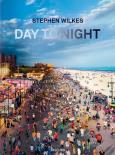
If you were to stand in one spot at an iconic location for 30 hours and simply observe, never closing your eyes, you still wouldn’t be able to take in all the detail and emotion found in a Stephen Wilkes panoramic photograph. Not only does Wilkes shoot over 1,500 exposures from a fixed angle, he also distills this visual information afterward in his studio, painstakingly composing selected frames into a single image.
Day to Night presents 60 epic panoramas created between 2009 and 2022, shot everywhere from Africa’s Serengeti to the Blue Lagoon in Iceland, from the Grand Canyon to Coney Island, from Trafalgar Square to Times Square. Each composition is a labor of love as well as patience. Wilkes waited more than two years to gain permission to photograph Pope Francis celebrating Easter mass in the Vatican, ultimately producing a vivid tableau in which the pontiff appears 10 times.
The book also features extraordinary details—works of art in their own right that highlight the stories contained within each image. A bride makes her way through Central Park; in Tanzania, zebras gather around a near-invisible watering hole during a drought; in Rio de Janeiro, surfers come and go while a man holds a sign reading “No more than two questions per customer.” “It is exactly these small stories, these details, that draw people into the photographs,” says Wilkes. Once discovered, these mini narratives lend each composition a personal, candid feel.
This collection takes us on a seamless trip from dawn to dark across the world’s most iconic locations, unveiling the unique ebb and flow of man-made and natural landmarks like never before.
The sky’s the limit with 50 ingenious tree houses around the world
The idea of climbing a tree for shelter, or just to see the earth from another perspective, is as old as humanity. In this neat TASCHEN edition, take a tour of some of our finest arboreal adventures with 50 of the most beautiful, inventive, and enchanting tree houses around the world.
From romantic to contemporary, from famed architects to little-known craftsmen, you’ll scale the heights to visit all manner of treetop structures, from a teahouse, restaurant, hotel, and children’s playhouse to simple perches from which to contemplate life, enjoy the view, and discover that tree houses take as many forms as the imagination can offer. With an abundance of gorgeous photographs and illustrations, this is an ode to alternative living, where playful imagination meets eco-sensitive finesse.
The companion volume to Peter Lindbergh’s first self-curated exhibition
The first-ever exhibition curated by Peter Lindbergh himself, shortly before his untimely death, Untold Stories at the Düsseldorf Kunstpalast served as a blank canvas for the photographer’s unrestrained vision and creativity. Given total artistic freedom, Lindbergh curated an uncompromising collection that sheds an unexpected light on his colossal oeuvre. This artist's book, the official companion to the landmark exhibition, offers an extensive, firsthand look at the highly personal collection. When it came to printing his photos, Lindbergh chose a special uncoated paper – a thin sheet with a soft, open surface – as a deliberate aesthetic statement.
Renowned the world over, Lindbergh’s images have left an indelible mark on contemporary culture and photo history. Here, the photographer experiments with his own oeuvre and narrates new stories while staying true to his lexicon. In both emblematic and never-before-seen images, he challenges his own icons and presents intimate moments shared with personalities who had been close to him for years, including Nicole Kidman, Uma Thurman, Robin Wright, Jessica Chastain, Jeanne Moreau, Naomi Campbell, Charlotte Rampling and many more.
This XL volume presents more than 150 photographs—many of them unpublished or short-lived, often having been commissioned by monthly fashion magazines such as Vogue, Harper’s Bazaar, Interview, Rolling Stone, W Magazine, or The Wall Street Journal. An extensive conversation between Lindbergh and Kunstpalast director Felix Krämer, as well as an homage by close friend Wim Wenders, offer fresh insights into the making of the collection. The result is an intimate personal statement by Lindbergh about his work.
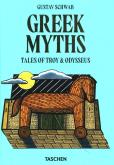
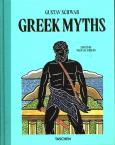
The Greek myths are timeless classics, whose scenes and figures have captivated us since ancient times. The gods and heroes of these legends hold up a mirror to the human condition, embodying universal characteristics and emotions, like love, hatred, fortune, jealousy, revenge, hubris, greed, or bravery. These traits are the basis for immortal dramas and rich narratives, as profound as they are entertaining, which form the bedrock of our culture and literature today and remain relevant and fascinating for all readers, young and old alike.
This edition contains 21 of the most famed episodes from the Trojan War, the subsequent wanderings of Odysseus, and his long-awaited return to Ithaca. The texts are carefully compiled from the seminal work Sagen des klassischen Altertums (Gods and Heroes: Myths and Epics of Ancient Greece) by Gustav Schwab (1792–1850), and strikingly illustrated by 15 artists, among them outstanding representatives of the Golden Age of Book Illustration and the Arts and Crafts Movement, including Walter Crane (1845–1915), William Russell Flint (1880–1969), Newell Convers Wyeth (1882–1945), and Virginia Frances Sterrett (1900–1931).
These illustrations are complemented by scene-setting vignettes for each story and a genealogical tree of Greek gods and goddesses by Clifford Harper. Placing the tales in a historical context, the book contains an introduction by Dr. Michael Siebler and is rounded off with an extensive glossary of the most important protagonists in the Greek myths. The heroism, tragedy, and theater of Greek mythology glimmer through each tale in this lavishly illustrated edition, awakening the gods and heroes to new life.
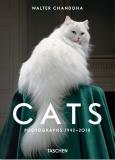
A career-spanning retrospective of the greatest cat photographer
On a winter’s night in 1949 in New York City, young marketing student and budding photographer Walter Chandoha spotted a stray kitten in the snow, bundled it into his coat, and brought it home. Little did he know he had just met the muse that would determine the course of his life. Chandoha turned his lens on his new feline friend—which he named Loco—and was so inspired by the results that he started photographing kittens from a local shelter. These images marked the start of an extraordinary career that would span seven decades.
Long before the Internet and #catsofinstagram, Chandoha was enrapturing the public with his fuzzy subjects. From advertisements to greetings cards, jigsaw puzzles to pet-food packaging, his images combined a genuine affection for the creatures, a strong work ethic, and flawless technique. Chandoha’s trademark glamorous lighting, which made each cat’s fur stand out in sharp relief, would define the visual vocabulary of animal portraiture for generations and inspire such masters as Andy Warhol, who took cues from Chandoha’s charming portraits in his illustrated cat book.
Cats leaps into the archives of this genre-defining artist, spanning color studio and environmental portraits, black-and-white street photography, images from vintage cat shows, tender pictures that combine his children with cats and more. This is a fitting tribute not just to these beguiling creatures but also to a remarkable photographer who passed away in 2019 at the age of 98; and whose compassion can be felt in each and every frame.
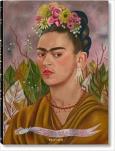
The complete paintings of Frida Kahlo in an XXL edition
Among the few women artists who have transcended art history, none had a meteoric rise quite like Mexican painter Frida Kahlo (1907–1954). Her unmistakable face, depicted in over fifty extraordinary self-portraits, has been admired by generations; along with hundreds of photographs taken by notable artists such as Edward Weston, Manuel and Lola Álvarez Bravo, Nickolas Muray, and Martin Munkácsi, they made Frida Kahlo an iconic image of 20th century art.
After an accident in her early youth, Frida became a painter of her own free will. Her marriage to Diego Rivera in 1929 placed her at the forefront of an artistic scene not only in the cultural Renaissance of Mexico, but also in the United States. Her work garnered praise from the poet André Breton, who added the Mexican painter to the ranks of international surrealism and exhibited her work in Paris in 1939 to the admiration of Picasso, Kandinsky, and Duchamp.
We access the intimacy of Frida’s affections and passions through a selection of drawings, pages from her personal diary, letters, and an extensive illustrated biography featuring photos of Frida, Diego, and the Casa Azul, Frida’s home and the center of her universe.
This large-format XXL book allows readers to admire Frida Kahlo’s paintings like never before, including unprecedented detail shots and famous photographs. It presents pieces in private collections and reproduces works that were previously lost or have not been exhibited for more than 80 years, forming the most extensive study of Kahlo’s work and life to date.
The best of Harry Benson's era-defining Beatles portfolio captures them on the road, performing, relaxing, composing and acting in A Hard Day's Night. From their famous pillow fight in Paris to their first U.S. tour, Benson's luminous black-and-white photographs show intimate glimpses of George, John, Paul, and Ringo during peak Beatlemania.
Ten produkt jest zapowiedzią. Realizacja Twojego zamówienia ulegnie przez to wydłużeniu do czasu premiery tej pozycji. Czy chcesz dodać ten produkt do koszyka?