In October Nights, Gerard de Nerval takes us on a gentle meander through nighttime Paris – a dreamlike journey towards getting lost. Also included in this volume is Sylvie, his haunting novella of love and memory, the ‘masterpiece’ that inspired Proust to write In Search of Lost Time. Together, these works by the French poet, visionary and pioneering modernist are a testament to the power of jewelled thinking, and an inspiration for flaneurs and romantics everywhere.
A dazzling and sweeping new novel from #1 Sunday Times bestselling author Emily Henry!
When Margaret Ives, the famously reclusive heiress, invites eternal optimist Alice Scott to the balmy Little Crescent Island, Alice knows this is it: her big break. And even more rare: a chance to impress her family with a Serious Publication.
The catch? Pulitzer-prize winning human thundercloud, Hayden Anderson, is sure of the same thing.
The proposal? A one-month trial period to unearth the truth behind one of the most scandalous families of the 20th Century, after which she’ll choose who’ll tell her story.
The problem? Margaret is only giving each of them tantalising pieces. Pieces they can’t put together because of an ironclad NDA and an inconvenient yearning pulsing between them every time they’re in the same room.
And it’s becoming abundantly clear that their story – just like the tale Margaret’s spinning – could be a mystery, tragedy, or love ballad … depending on who’s telling it.
When two teenage gangs are arrested after clashing violently in one of Venice's campi, the son of a local hero is implicated. But when Commissario Guido Brunetti is asked by a wealthy foreigner to vet this man, Monforte, for a job, he discovers that Monforte might not be such a hero after all.
This seeming contradiction, and a brutal attack on one of Brunetti's colleagues by a possible gang member, concentrate Brunetti's attentions. Soon, he discovers the sordid hypocrisy surrounding Monforte's past, culminating in a fiery meeting of two gangs and a final opportunity for redemption.
A Refiner's Fire is Donna Leon at her very best: an elegant, sophisticated storyteller whose indelible characters become richer with each book, and who constantly interrogates the ambiguity between moral and legal justice.
A definitive annotated edition of one of the greatest of Terry Pratchett’s multi-million-bestselling Discworld novels
Commander Sam Vimes of the Ankh-Morpork City Watch is in hot pursuit of a serial killer. The trouble is, a well-timed lightning strike has thrown both policeman and pursued into the city’s past. Now Vimes must relive the history that made him: a cruel regime, a bloody revolution, a corrupt police force, and, most unnerving of all, a keen young recruit named Sam Vimes… Night Watch, which draws on inspirations as far ranging as Victor Hugo and M*A*S*H, is a keen satire about the true nature of political power, and the sacrifices made in the name of the greater good; but also a profoundly empathetic novel about community, connection and the tenacity of the human spirit.
Terry Pratchett’s Discworld novels are among the most successful and influential fantasy titles of the twentieth and twenty-first centuries. This edition of Night Watch – written at the height of Pratchett’s imaginative powers – includes a new foreword by Rob Wilkins and an introduction and annotations by Dr David Lloyd and Dr Darryl Jones, contextualising the novel and Pratchett’s far-reaching legacy for new readers and current fans alike.
June 1944: In Operation Bagration, more than two million Red Army soldiers, facing 500,000 German soldiers, finally avenged their defeat in Operation Barbarossa in 1941. The same month saw the Allies triumph on the beaches of Normandy, but, despite the myths that remain, it was the events on the Eastern Front that sealed Hitler's fate and destroyed Nazism.
In his new book, bestselling historian Jonathan Dimbleby describes and analyses this momentous year, covering the military, political and diplomatic story in his evocative style. Drawing on previously untranslated German, Russian and Polish sources, we see how sophisticated new forms of deception and ruthless Partisan warfare shifted the Soviets’ fortunes, how their triumphs effectively gave Stalin authority to occupy Eastern Europe and how it was the events of 1944 that enabled Stalin to dictate the terms of the post-war settlement, laying the foundations for the Cold War . . .
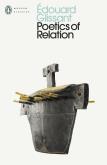
Édouard Glissant’s most celebrated, scintillating philosophical work – which sets out a new poetic vision for the world
‘We cry our cry of poetry. Our boats are open, and we sail them for everyone.’
In Poetics of Relation, his most celebrated philosophical work, Édouard Glissant turns the Caribbean reality of his life into a complex, energetic vision of a world in transformation. We come to see that relation in all its senses – telling, listening, connecting, and the parallel consciousness of self and surroundings – is the key to revolutionising mentalities and reshaping societies. We are not rooted, but ever-changing; we have a right to opacity and to difference, wherever we are. Told in scintillating prose, this unique exploration of language, slavery, and poetic freedom narrates an Antillean identity, but also that of the whole world.
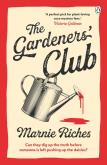
When Gill Swanley decides to take up gardening to fight the menopause she never expected it to become quite such a threatening hobby...
Joining the Bromley chapter of The Golden Trowel Gardening Society, Gill finds a group run by self-proclaimed horticultural guru Mike ‘Potato’ Berisford and top of the agenda is how the club can snatch the National Gardening Club of the Year Award.
But when a dead body turns up in the greenhouse, and a brick flies through the window telling them to take themselves out of the running, the group have to turn their attention to the sinister goings on.
Is is their arch-rivals Croydon? Or is someone someone else is targeting their rag tag group?
The brand new feel-good novel from the bestselling author of The Authenticity Project and The People on Platform 5
'Uplifting, heartwarming and joyful. Restored my faith in humankind' - Ruth Jones
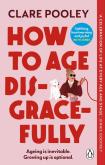
When age makes you invisible, secrets are easier to hide
Daphne knows that age is just a number. She also knows that society no longer pays her any attention – something she’s happy to exploit to help her hide a somewhat chequered past.
But finding herself alone on her 70th birthday, with only her plants to talk to and neighbours to stalk online, she decides she needs some friends. Joining a Senior Citizen's Social Club she’s horrified at the expectation she’ll spend her time enduring gentle crafting activities. Thankfully, the other members – including a failed actor addicted to shoplifting and a prolific yarn-bomber – agree.
After a tragic accident, the local council threaten to close the club – but they have underestimated the wrong group of pensioners...and with the help of a teenage dad and a geriatric, orphaned dog, the incongruous gang set out to prove it.
As long as their pasts don't catch up with them first…
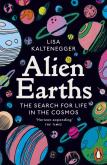
A superstar author chronicles our new age of exploration, discovering new worlds and describing how her team searches them for evidence of life
For thousands of years, humans have wondered whether we're alone in the cosmos. Now, for the first time, we have the technology to investigate. The question should have an obvious answer: yes or no. But once you try to find life elsewhere, you realize it is not so simple. How do you find it over cosmic distances? What actually is life?
As founding director of Cornell University's Carl Sagan Institute, astrophysicist Lisa Kaltenegger built a team of tenacious scientists from many disciplines to create a uniquely specialized toolkit to find life on faraway worlds. In Alien Earths, she demonstrates how we can use our homeworld as a Rosetta Stone, creatively analyzing Earth's history and its astonishing biosphere to inform this search. With infectious enthusiasm, she takes us on an eye-opening journey to the most unusual exoplanets that have shaken our worldview - planets covered in oceans of lava, lonely wanderers lost in space, and others with more than one sun in their sky! And the best contenders for Alien Earths. We also see the imagined worlds of science fiction and how close they come to reality.
We live in an incredible new epoch of exploration. As our witty and knowledgeable tour guide, Professor Kaltenegger shows how we discover not merely new continents, like the explorers of old, but whole new worlds circling other stars and how we could spot life there. Worlds from where aliens may even be gazing back at us. What if we're not alone?
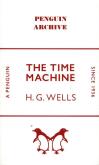
The Time Machine is the great, gleeful anarchist novel of the 1890s. It is both a thrilling adventure story and a satire on religion, evolution and human hopes. With this book, Wells invented an entirely new genre and did it better than any of his imitators.
An immediate bestseller, it has delighted and unnerved generations of readers, and will no doubt keep on doing so until some of the events predicted in the book make readers extinct.
The body was cold as ice; the heart had long ceased to beat: yet there were no other signs of death.'
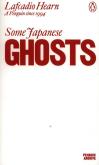
The phantoms and ghouls of Japanese folklore are in this book driven back into the world of the living. Mysterious brides melt into mist, paintings come alive, and man-eating goblins barter for redemption. Traditional Japanese folktales and legends, infused with memories of Lafcadio Hearn’s own haunted childhood, are here masterfully retold.
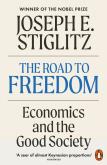
Despite its manifest failures, the narrative of neoliberalism retains its grip on the public mind and the policies of governments all over the world. By this narrative, less regulation and more ‘animal spirits’ capitalism produces not only greater prosperity, but more freedom for individuals in society - and is therefore morally better.
But, in The Road to Freedom Stiglitz asks, whose freedom are we – should we be – thinking about? What happens when one person’s freedom comes at the expense of another’s? Should the freedoms of corporations be allowed to impinge upon those of individuals in the ways they now do?
Taking on giants of neoliberalism such as Hayek and Friedman and examining how public opinion is formed, Stiglitz reclaims the language of freedom from the right to show that far from ‘free’ – unregulated – markets promoting growth and enterprise, they in fact reduce it, lessening economic opportunities for majorities and siphoning wealth from the many to the few – both individuals and countries. He shows how neoliberal economics and its implied moral system have impacted our legal and social freedoms in surprising ways, from property and intellectual rights, to education and social media.
Stiglitz’s eye, as always, is on how we might create the true human flourishing which should be the great aim of our economic and social system, and offers an alternative to that prevailing today. The Road to Freedom offers a powerful re-evaluation of democracy, economics and what constitutes a good society—and provides a roadmap of how we might achieve it.
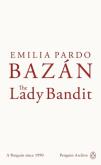
Priests with shotguns, scheming lovers and a necrophiliac gravedigger haunt the fables of Emilia Pardo Bazán, the formidable Spanish aristocrat, intellectual and feminist. These stories paint a rich and variegated image of Old Spain – sometimes tender, often provocative, always entertaining. But if you decide to visit, beware the Lady Bandit, whose strong, rough hands might grab your neck, and squeeze and squeeze and squeeze . . .
Marian Forrester enchants everyone around her: her husband, an elderly railroad pioneer; the small town of Sweet Water; and Niel Herbert, her unwavering confidant. Yet, her irresistible charm and dazzling wit conceal a dangerous vulnerability – and her greatest secret. A significant inspiration for The Great Gatsby, this exquisite novella is a poignant elegy for a bygone era, fading into history.
'I decided that my trip had evidently been in vain, since nothing of interest could possibly occur on this visit. I was mistaken.'
Condemned to sleeplessness by the chatter permeating his guesthouse room, a forlorn traveller turns his ear to the riotous tale spun by the garrulous, meddlesome, inane and utterly unprincipled Márya Martýnovna next door. Her exuberant deformations of morality and language scandalized Tsarist society, and she remains one of Russian literature’s most uproarious anti-heroes.
'What does love fear? Limitation.'
Johannes stealthily pursues Cordelia through the streets of Copenhagen, and through an intricate, manipulative courtship contrives to possess her. Motivated not by love or sex but by sensation and experiment, he seeks to make the object of his desire desire him – and then to retreat. At once a captivating story and philosophical exploration of existence’s entanglements, The Seducer's Diary is also an excoriating reconstruction of Kierkegaard’s own romantic failures.
Rabindranath Tagore was one of the greatest authors of his generation. In these two short stories – ‘The Broken Nest’ and ‘Dead or Alive’ – he is at his devastating best, charting the slow, then fast, implosion of two perfect Bengali households. No-one understands each other; everything is misconstrued; all is lost.
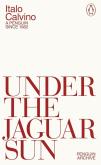
I went down, I climbed back up into the light of the jaguar sun – into the sea of the green sap of the leaves. The world spun, I plunged down, my throat cut by the knife of the king-priest … The solar energy coursed along dense networks of blood and chlorophyll; I was living and dying in all the fibers of what is chewed and digested and in all the fibres that absorb the sun
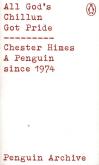
Best known for his hardboiled Harlem Detective series, Chester Himes was also a superb literary writer, beginning his creative life by writing short stories in the 1930s while serving jail time for armed robbery. Selected here are some of his best stories – from a satirical tale about a student bet that purportedly disproves the existence of racism in Los Angeles to a chilling drama in which a snake invades a family home.
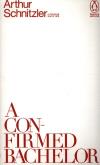
Following the death of his sister, middle-aged Dr Graesler leaves his winter home in Lanzarote for a health resort in Germany, where he practised medicine for many years. There he meets the Schleheim family, and is particularly drawn to their daughter Sabine. But a simple, stilted courtship soon unravels a web of hushed-up suicide and illicit sexual liaisons. Arthur Schnitzler’s tumultuous psychodrama remains as startling now as it did on first publication.
Ten produkt jest zapowiedzią. Realizacja Twojego zamówienia ulegnie przez to wydłużeniu do czasu premiery tej pozycji. Czy chcesz dodać ten produkt do koszyka?