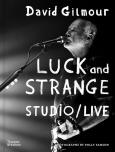
This intimate photo chronicle by Polly Samson documents both the recording of David Gilmour's No. 1 album Luck and Strange and the acclaimed tour which saw the Pink Floyd legend playing sellout shows in Rome, London, LA and New York.
Samson, who is Gilmour’s partner and creative collaborator, as well as an acclaimed novelist / photographer in her own right, captures the process as the album takes shape: from conception and recording, off-duty and studio immersion, to release and live performance; from candid behind-the-scenes shots, to theatrical stage moments. We see an artist at work, the collaborative process, the moments of light relief – and the focus as the work takes flight.
The book features the unmistakable hand lettering of Anton Corbijn on the cover and throughout, plus an interview by rock photographer Jill Furmanovsky with Polly Samson that sheds light on a photographer’s craft, as well as providing insights into Samson's relationship with Gilmour. The foreword is written by the late Alan Yentob.
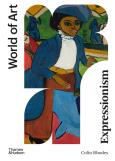
A comprehensive new overview of expressionism, tracing its evolution from the nineteenth century to the present day.
Expressionist artists believed in the art object’s ability to communicate emotion, irrespective of any representational or narrative content. In this comprehensive introduction to one of the most radical artistic movements of our time, writer, artist, curator and educator Colin Rhodes traces the thread of expressionist thought from the nineteenth century to the present day, mapping its various manifestations across Europe and the USA, as well as parts of Africa, Asia and South America.
By paying particular attention to nuanced issues of gender, sexuality, and cultural appropriation Rhodes challenges the received art-historical narrative and reassesses it in the context of broader twentieth and twenty-first century artistic practice. Generously illustrated, the diverse selection of artists featured in this book range from Wassily Kandinsky, Erma Bossi, Francis Bacon, and Mark Rothko to Ursula Schultze-Bluhm, Gillian Ayres, Purvis Young and Jadé Fadojutimi.
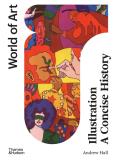
An indispensable guide to the international history of illustrated images, from 1750 to the present day.
Illustration: A Concise History is a dynamic visual journey through the landscape of illustration that maps the evolution of the discipline from the industrial revolution to the post-digital age and showcases over 180 of its most iconic practitioners, including Laura Knight, Antonio Lopez, Käthe Kollwitz and Hayao Miyazaki. By contextualizing the subject within a framework of key political events, cultural innovations and technological advances, Andrew Hall redefines how we might think about illustration and the place that it has in our ever-evolving global network.
The second half of this introductory volume follows on from the ten chapters charting the chronology of illustration to provide a more in-depth look at its specific commercial genres across eleven feature sections, each including mini-histories, practical career advice and biographies of inspirational practitioners who operated within the field.
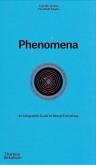
A vibrant infographics book made for lovers of science, geography and extraordinary discoveries to better understand the infinite richness of the world.
Zoology, botany, astrophysics, seismology... This book is all about making science accessible to all.
From fireflies to the Big Bang, from the magnificent maps of the world's sands to the anatomy of ice crystals, these 125 illustrated graphic phenomena are designed to take you on a stroll through the vast world of knowledge.
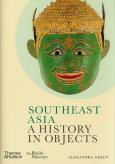
A new take on Southeast Asia’s complex history, expertly told through art objects and cultural artefacts dating from the Neolithic Age to the present. Southeast Asia is home to numerous world heritage sites. Through engaging texts and expertly curated objects from the British Museum collection, arranged chronologically and thematically into seven chapters, this volume offers a new approach to one of the most complex and diverse areas of the world. Every object tells a story in a wide-ranging and accessible selection that illuminates the civilizations, societies and local cultures that have defined Southeast Asia over the past 6,000 years. From the emergence of early agricultural communities and stratified societies to the rise of powerful empires and religious developments in Buddhism, Hinduism, Islam and Christianity, and to the eras of colonial rule and independence, curator and art historian Alexandra Green traces and explores the variety of Southeast Asian cultures. The texts describe the region through a broad range of objects, including sculptures from the historic civilizations of Java, Angkor, Bagan and Sukhothai, as well as ceramics, furniture, religious items, basketry, textiles, popular posters and contemporary art. This book is an informative visual delight for curious minds everywhere.
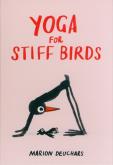
Loosen up with a smile on your face... Marion Deuchars has practiced yoga for many years, and well knows the benefits it brings. Now she shares that passion with her illustrated character Bob the Bird, whose expressive poses will charm you into a reviving session of yoga breathing, stretching, posing, and mindfulness. Yoga for Stiff Birds rejects the clichés of studio photography in favour of a more immediate, inviting, look. With a few brush strokes Marion helps Bob into every position from the downward-facing dog to the tree; both useful and inspiring, her art will raise a smile, whether you’re a regular practitioner or a yoga novice, and will encourage even the creakiest reader to breathe, stretch, and bend like they never have before.
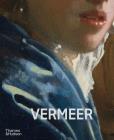
Vermeer's intensely quiet and enigmatic paintings invite the viewer into a private world, often prompting more questions than answers. Who is being portrayed? Are his subjects real or imagined? And how did he create such an unrivalled sense of intimacy?
Bringing together diverse strands of the Dutch master's professional and private worlds, this is the first major authoritative study of Vermeer's life and work for many years, throwing light on all thirty-seven of his paintings.
The book was designed by Irma Boom, the 'Queen of Books', and printed on an uncoated 'Munken Print White' paper, specially commissioned to ensure the veracity of colours. Irma Boom says: 'the matte paper brings you closer to Vermeer; there is no gloss or glare in between, just like with the real works.' With a wide selection of contextual illustrations, commentaries and up-to-date research by distinguished international Vermeer scholars, this is the definitive volume on the most admired of all seventeenth-century Dutch masters.
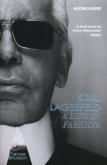
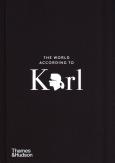
Karl Lagerfeld is a modern master of couture. He is also famously outspoken: his wise, surprising statements pop up like offbeat news flashes. This compact collection of quotations pays homage to the legendary éminence grise of the fashion world. Lagerfeld’s pronouncements – on fashion, women, art, politics, love, and life high and low – are famously oracular, seized upon by fashionistas, acolytes and sages around the world.
Created with the full approval of the designer himself, this cornucopia of Lagerfeld’s maxims is required reading for us all today as we negotiate the trickiest curves of modern life. Cultivated, unpredictable, provocative, sometimes shocking, Lagerfeld’s ‘bons mots’ are always impossible to ignore.
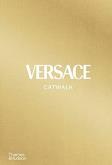
The first comprehensive presentation of Versace’s womenswear collections from its 1978 debut to today, seen through stunning catwalk photography
Founded in 1978, Gianni Versace’s family-operated fashion house quickly grew into a symbol of high glamour and luxury known the world over. Throughout the 1980s and 1990s Versace’s styles were worn by iconic celebrities such as Madonna and Princess Diana. After Gianni Versace’s tragic death in 1997, his sister Donatella became artistic director of the brand, steering it into the twenty-first century and cementing its legendary status for a new generation of fans.
This magnificent celebration of more than forty years of Versace’s trendsetting creations is organized chronologically and includes both haute-couture and ready-to-wear collections. Each collection is introduced by a short text revealing its influences and is illustrated with catwalk photographs that feature clothes, details, accessories, and beauty looks showcased by models including Kate Moss, Naomi Campbell, Gigi Hadid, and Kaia Gerber. With an extensive reference section, a concise history of the house, and biographical profiles of Gianni Versace and Donatella Versace, this volume provides an unrivaled view of one of the world’s most illustrious fashion houses.
‘Mr. Karpeles, a California-based painter and art critic, has ignited international interest in Czapski’s artwork’ Wall Street Journal
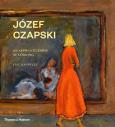
This stunning monograph, a long-overdue critical appraisal of Polish artist Józef Czapski (1896–1993), arrives at a moment when the artist’s legacy is gaining new recognition. Within these pages, author Eric Karpeles conveys how making art was so enmeshed with Czapski’s way of seeing and being in the world that it was second nature. Given that he lived into his 97th year, it’s no surprise that the artist has works dating from every decade of the 20th century but the first. As witness to the tumultuous events of that century, he found in painting ‘a refuge and a salvation’.
Prolific as a painter, he was equally disciplined in recording the events of his life in pencil, ink, and watercolour in his journals. At a time when abstract art tended to dominate aesthetic discourse, he preferred to observe the world around him, to portray people going about their daily business. Some of his most compelling works depict theatre-goers and art lovers doing what they do best – looking.
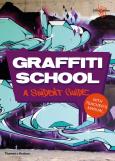
Students . . .
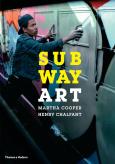
Do you want to learn to write graffiti? This is the book you need
‘The step-by-step demonstrations of techniques are surprisingly comprehensive, making this a perfect birthday or Christmas present for a teenage relative with a creative streak’ – Artists & Illustrators
Find out how to:
• design your own letter style
• use effects to create a unique tag
• create throw-ups
• include fills and motifs
• paint wildstyle, bubblestyle and blockbusters
• build up large burners
• handle a spray can
• get your work up safely and legally
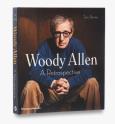
‘Other people finish a film. It’s over and it’s successful. They read the reviews. They have a party. There’s some kind of relief. For me it’s like stamping out cookies. I finish a film and I go on to the next one.’ Woody Allen
In this retrospective, Tom Shone reviews Woody Allen’s entire career, providing incisive commentary on his films and shedding light on this uniquely self-deprecating filmmaker, with the help of comments contributed by Allen himself. Superbly illustrated with more than 250 key images, this is a fitting tribute to one of the masters of modern cinema, published to mark Woody Allen’s eightieth birthday.
Woody Allen is a uniquely innovative performer, writer and director with nearly fifty movies to his credit, from cult slapstick films and romantic comedies to introspective character studies and crime thrillers. Classics such as Annie Hall, Manhattan, Stardust Memories, Broadway Danny Rose and Hannah and Her Sisters still resonate, and more recently Midnight in Paris and Blue Jasmine have been notable successes.
Born Allan Stewart Konigsberg on 1 December 1935 and raised in New York City, he was destined for a show-business career when he began writing scripts for TV shows while still a teenager. He then achieved recognition as a stand-up comedian with the release of three albums of his nightclub performances. Allen first tried writing a screenplay in the mid-1960s for What’s New Pussycat?. Not satisfied with the final film, he decided that he would direct as well as write his next picture, What’s Up, Tiger Lily?, in 1966.
Woody Allen’s output has always been prodigious; he has made a film a year, more or less, since the early 1970s. Famously indifferent to award ceremonies, and having never accepted an Oscar in person, Allen has won numerous accolades for his directing and writing, including four Oscars, nine BAFTAs, two Golden Globes and, in 2014, the prestigious Cecil B. DeMille award for his contribution to cinema.
Ten produkt jest zapowiedzią. Realizacja Twojego zamówienia ulegnie przez to wydłużeniu do czasu premiery tej pozycji. Czy chcesz dodać ten produkt do koszyka?